03 July 2007

Is justice colour blind?

Judges in the highest Court in the land have shown that, like all of us, they may be prey to the seductive effects of branding. And one of the world’s biggest brands may have been the loser.

The High Court recently refused BP leave to appeal an earlier Federal Court decision rejecting the petroleum giant’s application for a trade mark for the colour green. But remarks made during the hearing suggest that the judges at times got caught up in the current frenzy of “green” branding in the marketplace.

Consumers are now inundated with “green” claims, with everyone from energy utilities, banks and retailers to toilet paper invoking “green” credentials. “Green” has effectively become a brand in its own right. But it’s easy to forget that the word “green” hasn’t always carried this meaning.

When I was growing up, calling someone “green” meant they were raw, immature, untried or naïve. You could be green with envy. And having a “green thumb” meant you were a dab hand in the garden, but by no means a “greenie”. In fact, many gardeners with the greenest thumbs probably burned their incinerators, had no compost bins, didn’t mulch, wasted water and used all kinds of nasty chemicals to keep the indigenous bugs off the exotic ornamentals.

These were evocative and metaphorical uses of the word green… but not the colour green.

BP has been seeking for many years to register the colour green – not the word – as a trade mark in relation to petrol retailing. The High Court hearing in May was basically its last roll of the dice.

Reading the transcript, one could be forgiven for thinking that Justice William Gummow had decided in advance that “green” always has a particular meaning connected with the environment and that BP’s choice of green was related to this meaning, and not to brand identification. His Honour asked David Shavin, QC, appearing for BP:
“What is the… significance of fixing upon green? Trademarks, as we know, can have their attraction and force from an impact that is illusive or evocative upon the viewer. What is the idea here?... What is nature (sic) and healthy about the production or consumption of petroleum products?”

His Honour apparently struggled to follow or accept Mr Shavin’s explanation that the colour green had been chosen years ago by BP for reasons unrelated to what the word green may have come to mean in 2007. Indeed, it had been noted in an earlier trial in the Federal Court that BP has used green in relation to petrol pumps since 1927 in the UK and in Australia since 1954.

Justice Michael Kirby, while acknowledging the history of BP's use of green, remarked that it was:
“a clever colour (for BP) to have chosen so many years ago because it is now very much associated with the environmental movement”.

Was His Honour suggesting that BP, when choosing a colour for its bowsers in 1927, had “cleverly” predicted the meanings that the word “green” would take on 80 years later?

Perhaps it’s understandable that, in the midst of hundreds of volumes of evidence and with an intense focus on complex issues of law and the interpretation of language, both learned judges appear to have confused the word green and the colour green. But the ability to draw such a distinction is surely what the public expects of the ultimate triers of fact.

The national depression initiative chose the name beyondblue to take advantage of one use of the word “blue” to denote human sorrow. That doesn’t stop numerous businesses using, and seeking trade mark protection for, the colour blue in a range of different categories. Luxury jeweller Tiffany has a colour trade mark for its famous blue box, OneSteel for blue fencing wire and Pfizer for the blue colour of its diamond-shaped Viagra tablets. Naturally, none of these companies wants consumers to associate its brand with depression, but clearly none of them is worried that this will happen through their use of the colour blue.

Consumers can and do distinguish all the time between colours as visual brand identity symbols and the possible meanings of the words we use for colours. For example, ask consumers about colours and brands in the rental car category and you’ll find green identifies Europcar (nothing to do with the environment), yellow identifies Hertz (not “cowardly”) and red identifies Avis (not “communist”).

BP’s High Court appeal ultimately failed on a number of legal grounds. But just imagine the outcry if someone in authority had suggested in passing that when Australia Post sought a trade mark for the colour red in relation to postal services it was doing so in order to convey communist sympathies!

26 June 2007

Leisel endorsing Preston Motors? Someone selected the wrong gear!

Dy Dr Stephen Downes, as published in Crikey! on 20 June 2006.
In sports sponsorship terms, swimmer Leisel Jones is a hot property. An Olympian at age 14 in Sydney, she won gold, silver and bronze medals at the Athens Olympics in 2004. Two years later, she followed up with four gold medals at the Melbourne 2006 Commonwealth Games, and was chosen to carry the Australian flag in the closing ceremony.

She’s young, talented and likeable. And just prior to the FINA World Championships in March this year, Swiss watch brand Tag Heuer unveiled an advertising campaign featuring Leisel as it newest – and first Australian – brand ambassador, a role in which she joined Brad Pitt, Uma Thurman, Maria Sharapova, Tiger Woods, Steve McQueen and various F1 drivers. (Interestingly, you won't find her listed on the "Stars and Glamour" page of the Tag Heuer website.)

In the latest issue of the Sweeney Sports Report , which computes a kind of sponsorship “order of merit” based on consumers’ ratings of athletes’ suitability as brand endorsers, Leisel Jones gained 7 “Sweeney points” to be ranked equal 18th with Essendon AFL veteran James Hird, race driver Mark Skaife and Socceroo Tim Cahill. This puts her ahead of such notables as Lleyton Hewitt, Brownlow Medallist Chris Judd, Socceroo captain Mark Viduka and World Cup cricketer Andrew Symonds.

Given that background, if you were managing or advising Leisel Jones, what car brand would you seek out as the best match for a popular, credible endorser who’s already a glamorous Tag Heuer ambassador? A prestige marque, of course. Something speedy, performance-oriented, highly engineered and European, naturally. BMW, Audi, Mini or Mercedes perhaps?

Guess again.

This week, Leisel popped up on Melbourne free-to-air TV spruiking for local Holden dealer Preston Motors in a cheap and cheerful, “past-its-prime-time” commercial. Sure, she looked pleasant and perky, and she delivered her lines well – as well as you can when the script calls for something corny along the lines of “Dive in to Preston Motors”, repeated several times to camera. And there’s nothing wrong with Preston Motors; it’s an old-time dealership that’s been around since 1912, with its roots in Melbourne’s working-class northern suburbs.

But it’s a bizarre choice for Leisel, given her potential, her Sweeney ranking and her own apparent commercial aspirations just a few weeks ago. When she split with her coach in April this year, The Age reported that her objectives were “to cash in on commercial opportunities in Melbourne” and be with her footballer boyfriend, Marty Pask of the Western Bulldogs. Melbourne was looked upon as “a land of opportunity” and her earning capabilities were set to go “through the roof”.

The chance to do a lame ad for a local car dealer doesn’t look anything like a golden opportunity. And I’m not saying Preston Motors are cheap, but the ad’s script and production values suggest that the fee wouldn’t keep her supplied with Uncle Toby’s oats (another of her sponsors) for terribly long. Perhaps she got a car as “contra”.

But the long-term consequences are potentially much more significant than the simple matter of what Leisel got paid for this particular gig. Becoming known (and possibly ridiculed) for doing poor-quality, small-time or even ill-fitting endorsements can seriously damage an athlete or celebrity’s credibility as a presenter and hence his or her perceived value to marketers as a “co-brand”. It’s been speculated (as reported in Crikey! 21 July 2005) that even Lleyton Hewitt’s high-profile ads for Sorbent, while apparently beneficial to the brand, harmed his chances of maintaining and winning other endorsements by helping (as Inside Sport put it) to “smear (his) reputation permanently through association with loo paper”.

So who is advising Leisel? Who convinced her that becoming a spokesmodel for Preston Motors was a good idea, and why the heck did she agree?

25 May 2007

Why the "WorkChoices" brand is now unemployed


(As published in Crikey!)

In turning its back on the name “WorkChoices” for its industrial relations policy and legislation, as reported late last week , the Howard government is finally acknowledging what can only be regarded as a brand strategy disaster. The new wave of Commonwealth IR advertising does not use the WorkChoices name, and it has also reportedly been dropped from other communications vehicles, including call centre scripts.

Why has WorkChoices failed as a brand name, in spite of the millions spent devising it (it has a distinctly over-workshopped feel), protecting it (via three separate trade marks in nine classes, including this doozy ), and on the website, call centres, and mailouts, not to mention the $45 million spent in the first round of advertising?

Is it simply that the name WorkChoices is so uninspired and pedestrian, or to be even more blunt, “lame”? “Choices” is one of those words, along with “options” and “solutions”, that are appallingly overused in brand and product naming at the moment, especially at the lower end of the market – even the local taxi truck owner-driver now describes his business as “logistics solutions”. You can’t expect consumers to warm to a brand name they feel embarrassed to use. Even the PM himself seemed to be admitting as much last week , when he said: “I don’t always describe it as WorkChoices. I sometimes say industrial relations, I sometimes say workplace relations”. You can bet the marketers of Coke aren’t happy for people to “sometimes” ask for “a cola”.

Or is it because WorkChoices so clearly fails the “Newspeak” test for sincerity in political language? Any reader of Orwell’s 1984 can recognise the absurdity of the Ministry of Truth being responsible for propaganda. So when politicians (or marketers) use a word like “choices”, even the least cynical amongst us is immediately prompted to wonder what choices or rights have actually been taken away. Perhaps the word “choices” itself has become too closely associated with propaganda. Even McDonald’s has made extensive use of it recently: “Deli Choices” is really about the Golden Arches fighting back against competition from Subway, while “Lighter Choices” is about breaking the strong mental association between the McDonald’s brand and fatty, unhealthy food.

Was there ever any hope of success for “WorkChoices” in the first place? Remember “Incentivation”, “Fightback”, “The Things That Matter” and “Knowledge Nation”? You don’t? Well, that’s the point. With an increasingly brand- and advertising literate electorate, attempts to brand political policies seem doomed to fail ever more spectacularly.

It’s not just the millions in wasted taxpayer dollars that should have Howard, Joe Hockey and the architects of the WorkChoices name hanging their heads in shame – there’s a significant political defeat here, too. “WorkChoices” not only failed to fire consumers’ imaginations, but Labor and the unions wouldn’t buy into it, either, maintaining the focus of their own counter-campaigns on phrases like “Howard’s IR laws” and “Your Rights At Work”. Simply walking away from the WorkChoices name at this late stage isn’t likely to allow the Howard government to leave the negative brand associations behind. The new slogan – “Know Where You Stand” – is also ripe for counter-argument and parody, as some bloggers have been quick to point out.

In the right hands, a well-chosen and well-managed brand can be a powerful influencer of perceptions, attitudes and behaviour. But the whole sorry WorkChoices episode seems to confirm that when it comes to branding contentious policy initiatives, you can’t polish a turd.

03 May 2007

I see dead people… in prime time


(Cartoon by Peter Nicholson)

By Stephen Downes, as first published on Crikey! on 26 April 2007

In life, it took a lot to silence Steve Irwin. His unbridled enthusiasm for wildlife and environmental causes and his exuberant turn of phrase made him a magnetic presenter and 24-karat gold talent for US chat shows. And it seems that even death can’t keep the irrepressible Crocodile Hunter quiet.

Several times this week while watching evening TV, I have had the unnerving experience of being enthusiastically invited by Steve himself to visit Australia Zoo on Queensland’s Sunshine Coast. The first time I saw the ad, I thought it was some kind of tribute – I kept waiting for the “R.I.P.” message, the soft focus, the slow-mo footage and a few bars of John Williamson. But no, this is just a regular ad, apparently unaltered from before Irwin’s death last September, and now screening in Melbourne during prime time, a slot where I’m not sure I’ve ever seen it before.

You’d have to say there are few precedents for advertising messages from beyond the grave, especially when the departed spokesperson speaks directly to the viewer.

Although he died in 1989, the late John Meillion’s voice was sampled and re-engineered – with permission from his estate – so that he could keep reminding audiences right through the 1990s that “a hard-earned thirst needs a big cold beer... and the best cold beer is Vic”. But while his voice contributed great character to the brand, entire generations of VB drinkers would have had little or no knowledge of Meillion as an individual or perceived this as a personal endorsement.

On the other hand, Pauline Hanson – on video, direct to camera – told her fellow Australians that “if you are seeing me now, it means that I have been murdered”. Of course, it turned out she wasn’t actually dead at all.

Perhaps the most famous and chilling posthumous presenter was Yul Brynner. After his death from lung cancer in 1985, the American Cancer Society ran ads featuring footage from an interview with Brynner recorded just months earlier (you can see one here). He turned to camera, looked down the barrel and said "Now that I'm gone, I tell you: Don't smoke, whatever you do, just don't smoke." This ad was especially powerful – spine-tingling even – because we knew he was dead (the ad starts with a “super” giving dates of his birth and death) and we realise that he knew he would be dead when the message screened.

You only have to watch the “In Memoriam” sequence at the Oscars each year to recognise the emotional power of images of famous and well-loved people who have recently passed on. Perhaps that’s why I have found it disquieting to watch ads featuring a healthy, “larger than life”, pre-stingray Steve Irwin still spruiking for Australia Zoo in his inimitable fashion.

Of course Steve’s memory and legacy will always be central to the marketing of Australia Zoo and a key attraction for visitors. But I have no doubt many consumers will find the Irwin family’s decision to run the same old ads with the same old Steve surprising and perhaps even inappropriate or disrespectful. After all, immediately after his death the Australian Quarantine and Inspection Service withdrew the entire taxpayer-funded “Quarantine Matters” campaign for which Irwin was spokesperson “as a gesture of respect for Steve and his family” (as reported by the Sydney Morning Herald).

19 April 2007

Are your Harpics showing...?


Back in the 1970s, we all had a good snigger at the Durex joke. Australians knew Durex as a brand of sticky tape but elsewhere in the world it was a condom. This created the premise for hilarious stories about cultural miscommunication. You know the kind of thing: Did you hear about the Australian tourist who went into a chemist shop in London and asked for "a packet of Durex, sticky on both sides"?

And Americans who come here still find it funny that we use Jif to clean the bathroom, because in the US it's a brand of peanut butter... not so good on the porcelain!

Now comes the case of "White & Shine" - perhaps not such a problem for consumers, but a whole lot less amusing for the companies concerned. Macleans - the toothpaste people - and Harpic - the toilet cleaning people - have virtually simultaneously launched product variants with identical names.

While the risk that consumers will be harmed as a result of confusion seems relatively low (although you never know what some people do!), the shared name poses a real business risk for Macleans. No-one who makes toothpaste wants their product to be associated in any way with toilets or even toilet cleaners. Consumers are very sensitive when it comes to oral care products - it's a highly sensory category, as Pond's found when it tried to launch Pond's Toothpaste (as documented in Matt Haig's book "Brand Failures"). It's amazing how many people who hear the name "Pond's Toothpaste" instantly react with a "Yuk!" as they taste and feel greasy Pond's Cold Cream - a powerful association - in their mouths.

Anyway, I say shame on both Macleans and Harpic for choosing such a boringly obvious and descriptive name for a product variant. My prediction for "White & Shine"? Expect the Macleans version to disappear very quickly. Everyone wants white and shiny teeth, but no-one wants to use a dunny brush!

16 April 2007

Update: Planet Ark comes clean!

Crikey! approached Planet Ark for comment on my piece (below) on the origins of its washing powder and got what looks to be a straight and detailed answer from Paul Klymenko, the organisation's Research Director, advising that it's made by a family-owned business in Melbourne. That's very encouraging, in keeping with what Planet Ark seems to be on about... and certainly not something to hide! I hope we soon see some reference to this on both the Planet Ark website and the packaging itself.

09 April 2007

Forbidden planet: Who makes Planet Ark washing powder?


In consumer marketing, green is the new black. It’s no secret that all manner of business and brands not previously known for their "earth-friendliness" are adding a splash of green here and there, and mostly to good effect.

Planet Ark, a green brand that first came to consumer attention more than a decade ago by promoting recycling initiatives, has come a long way from those humble beginnings. Planet Ark is now an impressive consumer brand with high levels of recognition, approval and trust. From a commercial perspective, this means the organisation is ideally placed to capitalise on the current surge of consumer interest in all things green, water-saving and climate-friendly. While early moves in this direction saw Planet Ark as merely an endorser of products like Safe brand toilet paper and Aware laundry powder, the Planet Ark brand has recently assumed centre stage as a consumer product brand in its own right.

My household recently ditched an established national brand in favour of Planet Ark washing powder, and we are pleased with its performance so far. The rather simple and stark orange and blue box is awash with all kinds of information about the product, its ingredients and its environmental and health credentials. Strangely, though, amidst all the detail about cellulose colloids and plant oil surfactants, there’s no indication of where the product is made, or by whom.

Oh, sure, there’s an address – Planet Ark Environmental Products Pty Ltd, based in the Blue Mountains town of Wentworth Falls – but the Planet Ark website lists only eight staff in the Wentworth Falls office. There’s no mention anywhere of the kind of manufacturing and packaging operations required to produce mass-market quantities of a consumer product, nor whether these operations are undertaken in Australia or elsewhere. Neither is there any reference in the Planet Ark organisational structure to supply chain management – the process of sourcing all these non-petrochemical ingredients – nor a logistics and distribution network large enough to supply national supermarket chains.

The extensive FAQs section of the Planet Ark laundry powder website also sheds no light on the issue of who makes it. The nearest it comes is a question that asks Are the products Australian Made & Owned?, to which the answer is Yes they are. Some of the raw materials are not made in Australia so they must be sourced from overseas.

It’s hard to understand why Planet Ark seems so coy about identifying its commercial partners in what looks to be a good product with commendable credentials, especially as it has proclaimed itself "pro-business" from the outset and been transparent about its other business relationships.

Let’s face it, consumers are sufficiently attuned to the business of brand extension to realise that Planet Ark must be contracting other organisations to manufacture, package and distribute its consumer products. Planet Ark "green" shopping bags, for example, are manufactured in China, and the organisation seems quite open about this. We don’t actually believe – or expect – that Planet Ark founders and front people like Jon Dee, Pat Cash and Rebecca Gilling are out in a back room somewhere with their sleeves rolled up, mixing up batches of detergent in plastic rubbish bins.

And surely no consumer would think the less of Planet Ark for contracting another organisation to make and distribute laundry detergent and other consumer products under its brand name, so long as the ingredients and processes are specified and controlled by Planet Ark and are in keeping with its values and not-for-profit status.

Do consumers really care who makes products, how and where? Traditionally, and for so-called "low involvement" categories, the answer was mainly "no". But recent trends in fast-moving consumer goods marketing have turned that around, especially among some significant customer segments. We are now encouraged – indeed, trained – to look for information and read the fine print: Is it made in Australia? Is it dolphin-friendly? Is it low GI and organic? Does it contain CFCs, artificial sweeteners, colours and flavours? Does it contain gluten or traces of nuts?

Ironically, it’s the very fact that Planet Ark provides so much product detail on its washing powder pack that makes the absence of manufacturing information stand out so starkly for me. But am I just overly suspicious and is the lack of disclosure merely an oversight? Or – behind the hundreds of words on biodegradability, zeolite minerals and being free of phosphates – is there something about the washing powder that Planet Ark would rather we didn’t know?

27 March 2007

Letter to Friends of the ABC re brand names


To: Glenys Stradijot
Friends of the ABC, Victoria

Dear Glenys

Thanks for your thoughtful response to my piece in Crikey re ABC and brand names. Believe it or not, I am a "friend" (with a lower case "f") of the ABC, a regular ABC viewer, listener and contributor (both formally and informally as a talkback caller on radio). I would be grateful if you could share my thoughts in reply with your members – I would be interested to hear what they think.

I’m sure you are correct that a sizeable section of the Australian community supports the principle of keeping the ABC free of advertising. But you are also right when you note that, in an era of what I would call "integrated marketing communications", the distinctions between advertising and other forms of promotion are increasingly blurred. And that’s precisely what makes the ABC’s current practice look so ridiculous.

Leaving aside the Grand Prix (which simply wouldn’t exist without commercial motives), in a week where ABC announcers were not allowed to say that Tasmania had won the "Pura Cup", this "citizen" encountered the following on ABC radio, TV and internet channels:

• ABC radio business news items featuring commentary by "stock market analysts" from Goldman Sachs JB Were and "currency strategists" from Macquarie Bank and ANZ Investment Bank;
• Several minutes of TV footage and dozens of web images showing sponsors’ logos (Ford, Emirates, HSBC, Vodafone, QBE, LG, etc.) on sporting jerseys and boundary line signage across multiple sporting codes;
• Numerous interviews with visiting actors, authors and musicians, all with a commercial property of some sort to promote, like singer-guitarist Tony Joe White, whose latest album we were told "is released by Warner Music" which no doubt sponsored his tour and the limo to Southbank for the interview;
• News items – on radio and online – reporting on a poll conducted and publicised by AC Nielsen – a commercial market research company – showing that 59 per cent of Australians are opposed to the "WorkChoices" industrial relations legislation (a name for which three separate Trade Marks have been applied by the Commonwealth);
• A cerebral palsy fundraiser to be held "at Riverside at Crown", which begs the question of whether mention of a commercial property like Crown is OK when it’s for charity?
• etc.

None of these constitutes "advertising" on the ABC. That is, in none of these cases did the commercial entity pay money to the ABC in exchange for airtime, so the national broadcaster’s conscience can remain clear. Neither, to my knowledge, does National Foods Limited attempt to pay the ABC to say "Pura Cup". Yet, in every one of these instances, there is a clear underlying marketing communications objective to the provision of expert commentary, the availability of a guest for interview or the sponsorship of a charity or community event by a commercial entity. It’s a simple question that I’m asking: Why should AC Nielsen – which benefits commercially from every mention of its name in a credible news service like the ABC’s and no doubt calculates a dollar value for every column inch or second of airtime such a poll generates – be entitled to acknowledgment by our national broadcaster when Telstra and Pura are not?

It’s highly likely that many of the concerned citizens that your organisation represents also support the principle of freedom of speech and are opposed to censorship, especially when it’s arbitrary and not transparent. Unless FABC has a better classification system than I do (and I teach marketing communications to postgraduate students) and you can mount a rational argument as to which of these cases deserve to get to air and which don’t, then I reiterate that refusing ABC announcers permission to say "Telstra Dome" or "Vodafone Arena" is not only unworkable but is a form of censorship of our national broadcaster and hence should be regarded as unconscionable.

Regards,
Stephen Downes

17 March 2007

Double standards at the ABC (Anti-Brand Corporation)


It's been a standing joke for years on the Coodabeen Champions' shows on ABC Radio: the ABC (so the apparent justification goes) is a Government broadcaster and doesn't carry advertising, so no brand names can be mentioned on-air. Of course, it's almost impossible to discuss modern life without reference to brands, so the Coodabeens have become experts at creating elaborate and humorous euphemisms to get around this restriction. In so doing, they clearly illustrate how ridiculous the policy is.

It seemed rather less ridiculous and a lot more bizarre when I was approached last year by ABC Local Radio to do an interview with Helen Razer about whether too much choice makes consumers unhappy (see this earlier blog entry). I was expressly cautioned by the producer not to mention any brand names! Asking a marketer to discuss consumer behaviour and decision-making without mentioning brands is like asking a football commentator not to mention the teams or the players.

But the inconsistency and hypocrisy of this policy was never more obvious than in today's 9 am news bulletin on ABC Local Radio in Melbourne. Back-to-back items referred to (1) the final of the AFL "pre-season cup" to be held "at Docklands" tonight and (2) the relative performances of the Ferrari and Red Bull teams in practice sessions yesterday for the Melbourne Formula 1 Grand Prix.

How can it be inappropriate or unacceptable for the ABC to say "NAB Cup" and "Telstra Dome" but perfectly OK to say "Ferrari" and "Red Bull" in the next breath?

It's a no-brainer that participation by a company like Red Bull in motor racing is entirely about brand positioning. It follows, therefore, that every single mention of the Red Bull racing team on the ABC over the course of the Grand Prix "festival" is a piece of marketing communications initiated by the brand owner. Significant and undeniable mass-market brand positioning objectives also underlie the participation of car makers like Honda, Toyota, BMW, Renault and even Ferrari.

And then ABC motor sports commentator Will Hagon - current holder of the world record for irrelevant, self-aggrandising name-dropping - will spend hours of airtime on "our ABC" rabbiting on about Bridgestone and Michelin tyres and Zylon anti-penetration panels (both trade marks, naturally).

Of course, names like AFL and Formula 1 are themselves highly-protected trade marks and commercial properties. So why aren't ABC announcers instructed to refer instead to "the national Australian Rules football competition" or "the elite international motor sport event being held at Albert Park"?

And, yes, I said "hypocrisy". Consider the ABC's own brands and commercial activities (while it may be "not-for-profit", it most certainly has commercial operations). The national broadcaster (see - I'm not using a brand name) has spawned a number of immensely successful brands: The Wiggles, PlaySchool, Triple J, the Hottest 100, Gardening Australia and The ABC Shop are just a few examples of brands from which the ABC earns revenue directly and through licensing agreements. Every mention of those lovable Bananas in Pyjamas on ABC TV, Radio or websites helps drive profits for a variety of commercial entities that pay the ABC to use the images of B1, B2 and Rat In A Hat.

Don't let's forget that the ABC also does tremendously well out of leveraging the equity of many other brands, both in terms of its programming and via sales through ABC stores: think Little Britain, SeaChange, Planet Earth, etc.

It's time we called things what they really are - let's name names. The bottom line (whoops, that's a bit commercial, isn't it?) is that the ABC's "policy" amounts to arbitrary censorship - it's applied inconsistently and unfairly, and it's entirely unworkable, unnecessary and unwelcome.

26 February 2007

The new Telstra: Boosting staff morale or "morals"?


When you set about transforming an under-performing services marketer, so the thinking goes, often the most important and hardest thing to change is its culture. Organisations like banks and telecoms perform best when the beliefs and behaviours of customer service personnel are aligned with corporate mission and values, and when everyone in the organisation understands his or her role in creating value for both customers and shareholders.

Employees of Telstra, and especially those in "front-line" functions like call centres, have doubtless had a hard time keeping the faith through recent years of struggle, uncertainty and unpopularity. But it looks like Sol Trujillo and Phil Burgess, experts in organisational change, may have succeeded in turning around the culture and boosting staff confidence.

Never mind the broadband technology, I met one of the "Next G" of Telstra employees over the weekend. She was proud of the company, apparently certain of the corporate mission and vision, and unshakeable in her dedication to ensuring Telstra targets the right customers… it’s just that I clearly wasn’t one of them!

My daughter won a mobile phone on Saturday. It came with a Telstra Pre-Paid "bundle". She already has a hand-me-down phone with a pre-paid account, currently with Optus – Telstra had previously been sopping up her unused credit every few weeks, leaving the phone useless in the occasional “emergency” situations for which it is intended.

So we set about switching her over to the funky new handset. Optus told me I needed to call Telstra to "unlock" the new phone so it could be used on another provider’s network.

"You’ll have to pay an unlocking fee," explained the Telstra customer service officer to whom I eventually got through. "For a new phone, that will probably be around $200."

When I said I thought that was a bit steep, especially for a pre-paid phone won by a 12-year-old, she disagreed. Anyway, she said, “I wouldn’t be giving a phone to a 12-year-old.”

Introducing Telstra’s new positioning in mobile telephony: the responsible, adults-only, service provider that knows better than you do whether your child should have a phone. If Telstra intends to put morals ahead of revenue and no longer sell mobile service to parents on behalf of their kids, shouldn’t we have seen some kind of announcement to the ASX?

Not that I got a chance to ask this newly-aligned and empowered Telstra advocate about the company’s strategy. "I actually work for Telstra and I won’t sit here and listen to you criticising them," she said. And there, by mutual consent, the call ended.

23 February 2007

Reply to Karl Treacher on "brand deceit"


I really appreciate Karl Treacher’s reply to my blog on his description of an "audit" that judged Vodafone to be "top of the bad brand behaviour list" because of "brand deceit" (as quoted in B&T magazine, 9 February 2007). However, I’m afraid Karl’s reply simply raises a lot more questions than it answers.

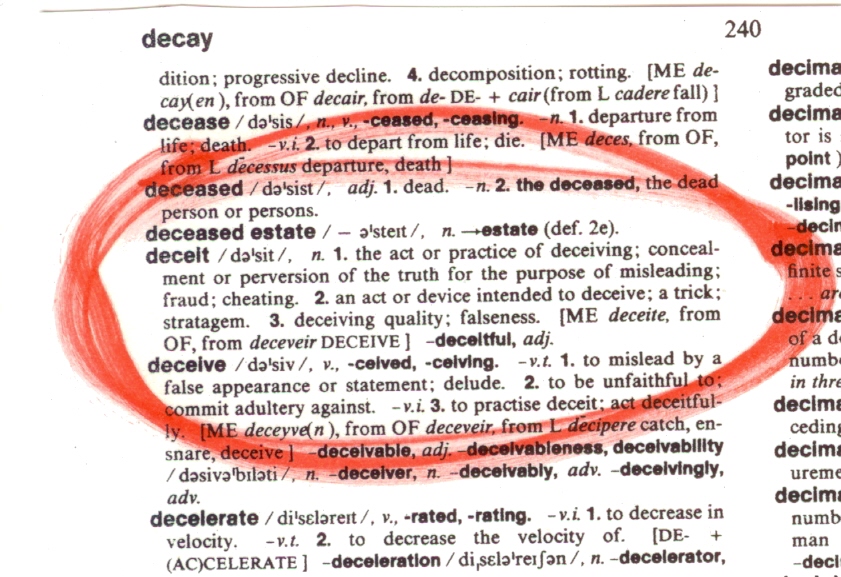
"Deceit" is a very strong word with a very specific meaning. The Macquarie Dictionary defines deceit unambiguously as "the act or practice of deceiving; concealment or perversion of the truth for the purpose of misleading; fraud; cheating".

The B&T story suggested that consumers had rated Vodafone highest on "deceit", but included absolutely no information about the study. In particular, in my original piece, I wondered about the methodology. Well, it was "sound", says Karl: "A 9 month study – man on the street Qual. 7 stores, 10 people / store".

So how were these qual respondents selected? What stores? Was there randomisation? What level of knowledge and experience had the respondents had with each of the categories and brands? In other words, how representative was the sample of the bulk of Australian consumers?

To make a judgment that Vodafone was "top of the list" of badly-behaved brands clearly implies some kind of quantitative assessment and measurement, beyond the findings of qualitative research. Was there any statistical analysis of the positions on the list? For example, how many respondents with a positive view of Vodafone would it have taken to knock them off the top? Two out of the 70? Ten out of 70? Fifty?

And where did deceit come into it? Was this the actual word used by consumers spontaneously (very uncommon in my experience as a qual researcher) to describe a disappointing brand experience, or a term offered to them by the qual interviewers, or was it added in post-fieldwork analysis by the folks at Brand Behaviour? Was the degree of deceit scored and compared by respondents on some kind of scale (in order to arrive at a list of the worst)? Were respondents asked to rank brands (put them in order) in terms of "deceit"? Which brands?

The point is, when you say a brand was "top of the list", then we expect that there’s a list somewhere and an explanation of how they got in that order. Karl’s use of the term "audit" also implies a structured measurement (quantitative methodologies) against some kind of benchmarks, rather than exploration and investigation (qualitative methodologies).

There’s a very big difference between – on the one hand – a brand that lets customers down and fails to deliver on its stated brand promise, and – on the other hand – a marketer that sets out deliberately to conceal or pervert the truth, and to cheat and mislead customers (as per the accepted definition of "deceit"). If consumers really believe that Vodafone has practised deceit, then the ACCC should sue them under sections 52 or 53 of the Trade Practices Act, which deal with misleading or deceptive conduct and false or misleading representations in trade or commerce.

I have no argument whatsoever with Karl over his conclusion that Vodafone hasn’t lived up to the promise of a couple of years ago – it has clearly slipped a long way from the position it held in 2004 - and that consumers may well feel the brand hasn't lived up to its promises. But in service markets like telecommunications, banking and insurance, there’s a 20-year stream of literature on "gaps" in service quality and service delivery that provides many suitable terms – with numerous published benchmarks – to describe under-performance against expectations (e.g. the Berry, Parasuraman and Zeithaml "negative disconfirmation" model). I just don’t think a term like "brand deceit" is necessary, illuminating or appropriate to describe what has happened to Vodafone.

Not that I want to sound like a grammar teacher, but "integrity" is also a pretty strong word.

The cover of B&T is a lot more public a forum than the QBrand QBlog. And clearly the Brand Behaviour report didn’t come into the possession of B&T off the back of a truck. Given that B&T claimed it as an "exclusive", I’m sure that Karl fully expected that it would get a run and generate publicity for Brand Behaviour in the process, with some quotes thrown in for good measure. He should also, therefore, have expected, and been prepared for, reasonable scrutiny.

Instead, Karl is being laughably unreasonable in questioning my integrity, apparently because I didn’t contact him personally to "get insight" before making public comment about the story. Does he seriously expect all 6000 readers of B&T to contact him directly if they have doubts, concerns or questions about his research, its apparent findings and Brand Behaviour’s interpretations?

15 February 2007

Brands (or brand consultants) behaving badly?


Like a promo for Desperate Housewives, the front page lead on the 9 February issue of the advertising industry weekly B&T promises to dish the dirt on the "cheats and deceits" in the world of brands.

"Our worst brands" have "deceived" customers, according to the findings of "a new audit exclusively obtained by B&T". Vodafone, NRMA and St George are criticised as the "worst behaved" brands, apparently for having stood for something they then failed to live up to.

Is this the pot calling the kettle black? The story promises a lot but delivers very little. Maybe that’s because, as it turns out, there’s "more to come" in next week’s B&T. Or maybe it’s because there’s not much substance or rigour behind the analysis in the first place.

The "audit" cited in the article was conducted by the Sydney-based consultancy Brand Behaviour. Karl Treacher, CEO of Brand Behaviour, says "brand deceit" is at the top of the list of bad brand behaviour and "so is Vodafone". Strangely, given the emotive connotations of the word, there’s no clear definition of "deceit". Branding Vodafone a "deceiver" seems a bit risky when there’s no information about the methodology: how many consumers were asked, which consumers, and how confusion and deceit were measured.

Many ad agencies and consulting firms have invested massive resources developing proprietary names and definitions for concepts related to branding. Consequently, it’s getting harder to differentiate well-founded, well-researched and well-intentioned concepts that add value and understanding to the discipline from those that owe their origin purely – and often cynically – to commercial motives.

Concepts like brand personality, values, image and identity are well supported by scholarship and empirical research. But according to the agencies, brands may also have brand DNA, brand aesthetics, brand sense, brandstretch and brand manners. A brand may even be a "lovemark". And now a "brand deceiver", too.

In 2004, Professor Mark Ritson – now at the Melbourne Business School – noted this "confusing cornucopia of conceptualization" and warned that "the brand of brand is in crisis".

Interestingly, also back in 2004, Karl Treacher wrote an "exclusive" article for B&T in which he told of having "investigated the relationship between marketing promises and internal fulfillment (sic)" at Vodafone (reproduced here). "Our findings were nothing short of extraordinary," he wrote. The Vodafone brand "grew in a place where no telco has ever been before, in our hearts".

Given his earlier state of rapture, perhaps Treacher’s current perspective on Vodafone should be viewed as that of a jilted lover dissing his "ex"!

01 February 2007

Comet McNugget: A lost marketing opportunity?


Given both its aggressive stance towards anyone or anything else using the prefix "Mc", and its knack for spotting an opportunity, it's perhaps surprising that McDonalds let recent astronomical events slip by without acknowledgment or intervention.

Comet McNaught put on an unexpectedly impressive show last week (you can see some pictures here), far more spectacular than the much-anticipated but underwhelming Halley's Comet in 1986.

A number of courses of action might have been open to the folks from the Golden Arches. For example, they could have sought a licensing deal to produce a "McNaught McNuggets" Happy Meal, with astronomical facts on the box and a toy comet (a lump of ice?). They might even have tried to buy the naming rights to the comet from the Australian astronomer who discovered it last August (you can read the story of it here).

But perhaps more true to form would have been legal action to try to restrict use of the "Mc" (leaving it as "Comet Naught"?), as McDonalds has taken against a number of other traders, viz. its current ham(burger)-fisted efforts in Victoria (see today's Herald-Sun), and even beyond food service markets (e.g. "McBrat" in clothing).

Action over the name of the comet would have raised an interesting legal question: just how far into the solar system do McDonalds' IP rights in "Mc" and "Mac" extend?

24 November 2006

Robbery under arms? Smells like ambush marketing to me


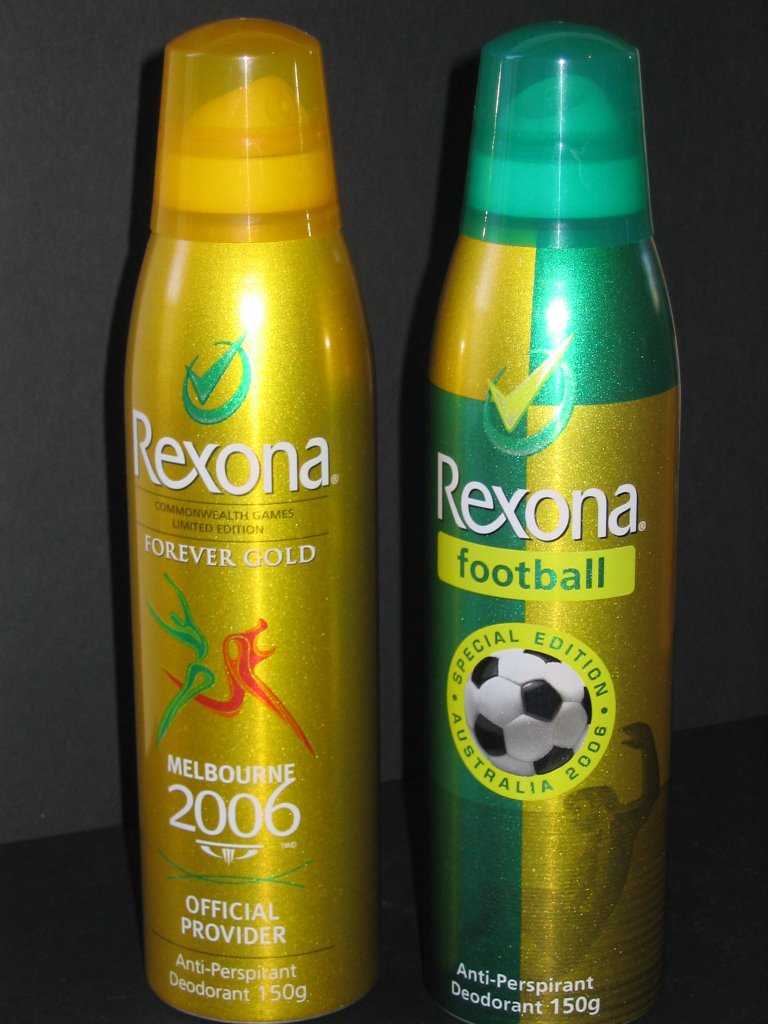
Unilever's Rexona deodorant brand was the official provider of deodorant to the Melbourne 2006 Commonwealth Games. This was proudly proclaimed early in 2006 on special green and gold cans bearing the official logo of the Games. While one might question whether the Comm Games actually needed an official deodorant (did they have an official shampoo, toothpaste or dental floss?), there is arguably a connection between athletic performance and sweaty armpits. From memory, tennis star Ivan Lendl endorsed a deodorant brand in the late 1970s with a line about how it made him "look cool on the court".

Anyway, it must have worked for them because someone at Unilever apparently decided to pursue another promotional tie-in with a major sporting event. Another special promo pack appeared in mid-2006, just as the FIFA World Cup was kicking off in Germany. As you can see from the picture, Rexona "Football" featured a gaudy green-and-gold colour scheme with a central logo of a soccer ball encircled by the words "Special Edition. Australia 2006". (It's a particularly messy and tacky design, by the way - nowhere near as classy as the rather minimalist Comm Games variants. Click on the picture above for a closer look.)

I initially took it to be some kind of officially-endorsed merchandise, and assumed that by buying it I was somehow (directly or indirectly through licensing fees) supporting Australia's World Cup campaign.

But on closer inspection, there's nothing official about it: no FIFA logo or reference, in fact no actual reference to the World Cup at all. Nor, despite the words "Australia 2006", is there any reference to the Football Federation of Australia or the Socceroos or their World Cup finals appearance.

Was Rexona deliberately hijacking increased consumer awareness of soccer (football) and heightened passion and patriotism surrounding Australia's first World Cup appearance in more than 30 years? In my view, all the signs point in that direction: why would the pack say "special edition" and "Australia 2006" if it was either a permanent "sports-strength" formulation or some kind of seasonal variant?

If deliberate, then it's a case of ambush marketing and it smells - someone at Unilever deserves a spray.

PS. Unilever's Australian website states that achieving their corporate purpose "requires the highest standards of corporate behaviour towards our employees, consumers and the societies and world in which we live". Nothing about free riding there!

22 November 2006

Whose brains fell in the blender at Boost Juice?


Boost Juice is undoubtedly one of the great success stories of the past few years in Australian retailing, brand management and franchising. Only an immensely powerful brand could have adolescents lining up and waiting several minutes to pay $5.00 or more for "healthy" FRUIT JUICE or induce them to drink WHEAT GRASS. (And to think parents of teens used to worry about their kids smoking grass!)

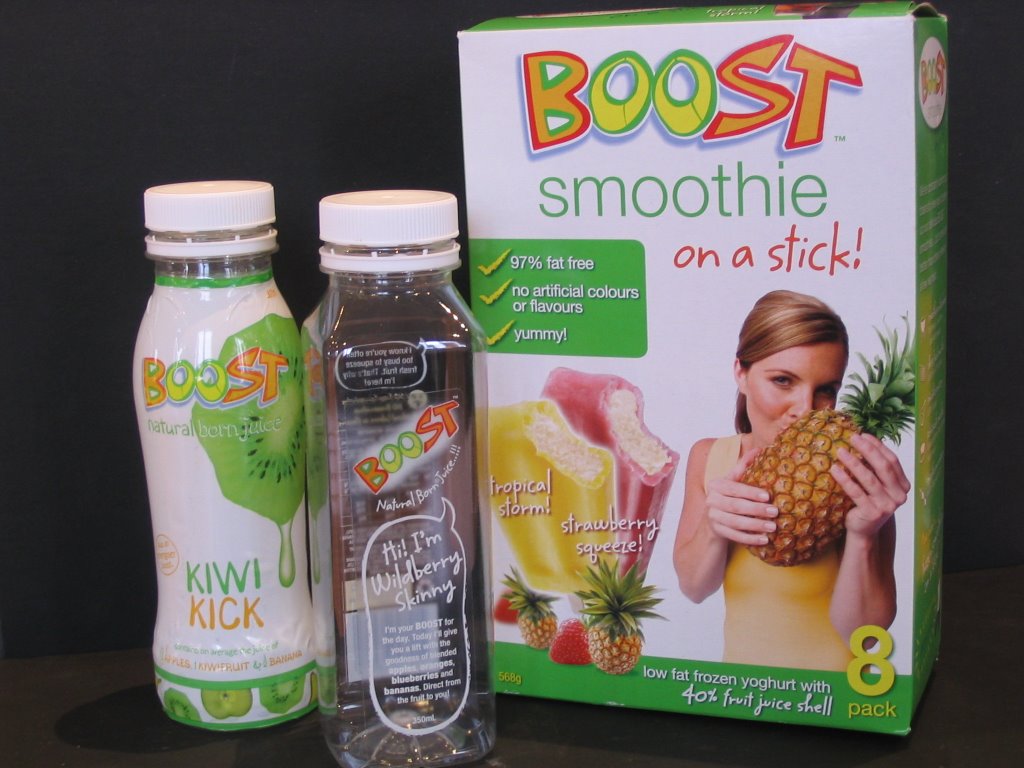
But Boost has been conspicuously unsuccessful thus far in its attempts to leverage its massive brand equity from the fresh juice service sector by way of brand extensions into the very different world of fast-moving consumer goods (FMCG). Two different attempts so far at bottled juice haven't exactly set the world on fire (see picture). Now you can find a thing called a Boost Smoothie on a Stick in the ice-cream freezer at the supermarket (it's actually fruit ice around frozen yoghurt, but let's call it ice-cream for the sake of simplicity).

I bought a pack of Smoothie On A Stick as soon as I saw it last week, because frankly I don't think it'll be around for long - at least not based on the present marketing program. In my view, Boost is making a number of critical mistakes, and these can be illustrated quite simply.

First, consider the Boost Juice brand. It instantly conjures up associations of custom-made and personalised (they even call out your name), premium fresh juice products at premium (some might say "exorbitant") prices, for which consumers are willing to sacrifice several minutes of their time waiting (perhaps partially compensated by the "scene" in the average Boost bar). Prices typically start at $4.00 and head upwards of $6.00 once you add some fancy supplements (often of dubious nutritional value, but that's a topic for another blog entry). Boost re-invented fruit juice and gave it enormous street cred. Ask most Australians aged 12 to 25 to describe juice and Boost or a Boost-style offer will likely be what they call to mind.

Now compare the Boost Smoothie On A Stick brand extension. The actual end product is a small ice confection, of stock-standard shape (looks like they use the same mould as any regular icy pole) on a stock-standard "icy-pole" stick - hardly re-inventing the category. Of course, they aren't sold singly - they come in a pack of 8, and they sit in the supermarket right alongside other boxed multi-pack ice-creams like the Streets Pine-Lime Splice (also 8 to a pack). In fact, functionally, the Pine-Lime Splice would seem to be Boost's closest rival in this category. Bulla (whose Regal Cream affiliate is actually listed as the manufacturer of the Boost products under licence) also does strawberry and mango Smoothie Splits.

A multi-pack of 8 doesn't exactly say "premium" either, does it? Typically, when a super-premium ice-cream brand (e.g. Magnum or Heaven) does a multi-pack, they put only 4 in a pack or, as special "mini" versions, 6 to a pack.

So if the product doesn't communicate a top of the market positioning, then price must be how Boost signals "premium", right?

Wrong! My 8-pack of Boost Smoothie On A Stick (600 mL) cost $3.99 at Coles (regular price, not apparently on special). An 8-pack of Streets Pine-Lime Splice (584 mL), bought in the same supermarket at the same time, cost $4.99.

And the ice confection itself? Pleasant enough, but nothing special in terms of flavour or texture, I'm afraid.

So what the heck is Boost Juice doing taking an immensely valuable brand that commands a massive brand premium down-market by entering a commodity category with a "common as muck" product and at a price well below that of an FMCG powerhouse like Unliver/Streets?

Destroying brand equity, that's what! Boost franchisees should take note... and start asking some serious questions.

04 October 2006

Stop the propaganda: "Free TV" is worth every cent we pay

"Do you want your children to have to pay... or just miss out?" warns Network Ten sports presenter Ryan Phelan, doing his best to put on a "Grim Reaper" voice, his suit buttoned up, and shot from below to make him look more even more serious and worrying.

It's the new campaign by Free TV (what the cabal of free-to-air broadcasters calls itself these days), and it even has its own web presence under the title Save My Sport. It's a cynical attempt to fend off new "Use it or lose it" legislation that would force free-to-air broadcasters to actually screen the sports (and other events) to which they buy rights... or else lose them.

"Save My Sport"? I say "Save Your Breath"!

"Last year," the campaign media release tells us, "Australian sports fans watched over 1648 hours of sport on free TV." What the release and the TVC conveniently ignore is the thousands upon thousands of hours of programming - including major sports and superbly-crafted, Emmy-winning fare treasured elsewhere in the world - that "Free TV" has rationed, buried, dumped, butchered and otherwise treated with utter contempt... and we, the viewers, with it.

Have you (like me) found yourself staying up till the early hours of Monday morning to watch first-run episodes of The Office (US version), winner of this year's Emmy for Best Comedy, wedged embarrassingly by Network Ten between ads for ringtones and mobile phone p*rn?

The litany of insults to the audience (and program makers) could run for pages (and often does in the Letters section of the Green Guide). Quality programming dumped after two weeks or banished to late night. Ground-breaking shows screened (first-run) at 4 am. Episodes of series with long story arcs screened out of order. Promos that contain "spoilers" (i.e. giving away key plot twists). Cutting PG-rated episodes of "The Simpsons" so they qualify for G classification, just so they could be promoted (not screened) in kids' viewing times.

And then there's the dissembling. "That was the last program in the current series of The West Wing (or The Sopranos, etc. etc.)," says veteran GTV9 voice-over man Pete Smith. "No it's not," we yell back at the TV - we've looked up the episode guide online or seen the DVD boxed set that's already available at JB Hi-Fi. Poor old Pete must feel like former Iraqi Information Minister Mohammed Saeed al-Sahhaf: we know it's a lie, they know it's a lie, but the networks just don't care.

So WHY don't they care, especially when these sort of practices have been exposed and criticised for years? It all comes down to one thing: as viewers of free-to-air television, we are NOT CUSTOMERS. In fact, to the folks at "Free TV", we aren't even complete human beings.

We are merely fingers on remote controls, bums on seats, eyeballs, or TARPS (target audience ratings points), to be harvested and offered up to the people they regard as their REAL customers - the advertisers. In terms of an industry value-chain model, we don't even qualify as "suppliers" to Free TV - we're actually more like raw material, to be extracted, processed, sorted, bundled up and handed over to the media buyers. So what if there's a bit of wastage along the way? That's just the cost of doing business!

The only time Free TV broadcasters acknowledge that there is value in an actual human response to what's on air is when they can see an opportunity to capture that value using a revenue-positive telephone voting scheme (Idol, Dancing With The Stars, etc).

When I pay for a service, I have a contractual relationship with the provider. Usually, it matters to service providers that I perceive value in the relationship and they care about my satisfaction. And if the provider misleads me, lies to me or fails to deliver what I have been promised, I can complain and get my money back, plus I have protection under a variety of laws.

But I have no contract with Channels Seven, Nine, or Ten. I have no customer number, no viewer profile, no CRM file, because I have no relationship. Hence, in the current culture of the networks, concepts like customer value and satisfaction are not only unheard of but completely irrelevant.

As Australian Pay TV continues to recruit new paying customers who perceive it as offering value (choice, timeshifted programs, commercial-free movies, personal digital recording TiVo-style, etc.), free-to-air broadcasters have got the wrong end of the stick. They are trying to hang on to the privileged position that once allowed them to succeed despite treating viewers like dirt. But the days when - as Kerry Packer famously said - a TV broadcasting licence was "a licence to print money" are over.

Free TV will only succeed in the future if free-to-air broadcasters start acknowledging TV viewers not only as valued customers but also as partners in the process of creating and delivering value to advertisers and shareholders.

It's simple: those who deliver superior customer value win. Hey Eddie, Kerry and John - that's how a "free" market works!

03 October 2006

Can you be "ambushed" by a blimp?


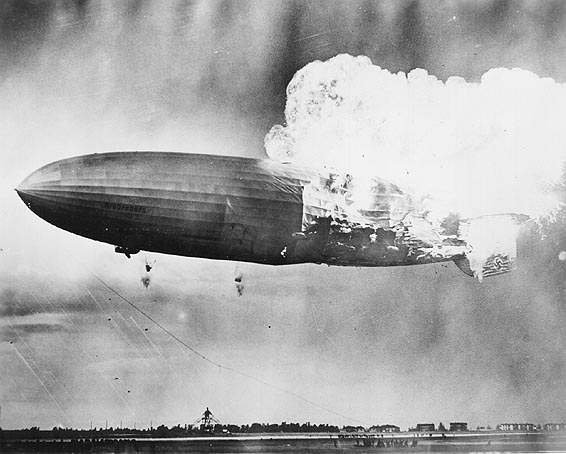
Oh, the humanity!

Looking at the fuss in the media, you could be forgiven for thinking that the Holden Airship had collided with one of the MCG light towers and collapsed in flames onto the hallowed turf during the Toyota AFL Grand Final. But by simply hovering in the general vicinity of Jolimont, the General's blimp has cast a giant shadow - figuratively and literally - over current sponsorship practices.

Numerous commentators are having a field day, even invoking the current chestnut of "Australian values": according to Crikey.com.au, Peter Young of Cricket Australia says it was "just un-Australian (for Holden) to try and sneak a free ride off the back of someone else's work".

But then perhaps Toyota ought to know a free ride when it sees one. Only five years ago Toyota itself employed controversial tactics against Holden that were seen at the time as "ambush marketing", in a campaign I’m sure no-one at Holden has forgotten.

Champion golfer (and sometime pasta sauce maker!) Greg Norman was paid by Holden to endorse its Statesman luxury sedan range for several years but, in 2001, switched allegiance to the Toyota Avalon for a sum reckoned to be $10 million (as reported on Drive.com.au at the time). The TV advertisement that launched Norman’s involvement with Toyota featured a weekend hacker so over-awed by Norman’s arrival at the tee that he duffs his drive into the car park, smashing the window of a Holden Statesman. He apologises profusely to Norman, who reassures the wayward swinger that the Statesman is not his – "Mine’s the Toyota".

Holden certainly objected at the time, both publicly and directly (by letter) to Toyota. Comparisons were drawn with the famous Mortein vs Raid case that centred on John Laws' switch from one fly spray brand to another. Noises were made about the potential for Holden to sue Toyota for misleading and deceptive conduct under s52 of the Trade Practices Act, but (to my knowledge) it never made it anywhere near the Federal Court. Unlikely, anyway, as (in contrast to Mortein v Raid) the distinction between the two brands was made fairly explicit in the TVC, leaving little risk that consumers might be confused as to Norman's new allegiance or perceive any connection between Statesman and Toyota.

Anyway, I haven't yet seen any actual cries of "no fair" from Toyota about the Airship ambush, and any loud public expression of concern is, in my opinion, highly unlikely. Don't get me wrong - I am vehemently opposed to free riding in any form. But while the blimp may well have been sailing close to the wind, a strident complaint from Toyota could easily be seen as the pot calling the kettle black... and how un-Australian would that be?!

14 September 2006

Pauline Hanson endorses the Donut King brand... Please explain?!


My lecture on "leveraging secondary brand assoc- iations" (by linking a brand to an entity like a celebrity, a country of origin, another brand, etc.) was still fresh in my mind the other night as I relaxed in front of the TV. Totally without warning, former One Nation leader and ex-con Pauline Hanson - one of the most divisive figures in recent Australian cultural history - appeared in the middle of an ad for Donut King, asking me something along the lines of "What do you feel like?".

Well, I'm happy to say that I felt like a fool - what would my students think? What would they ask me in next week's class if they'd seen this bizarre campaign? Surely all that stuff I'd been saying about marketers choosing celebrity endorsers for the beneficial secondary associations they bring to the brand must be complete rubbish?!

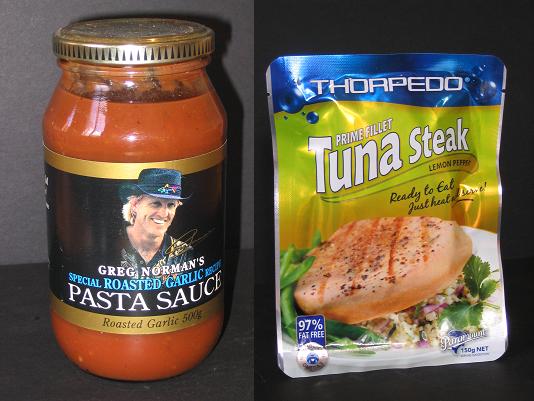
At first, I thought that I would have to explain it away as just another clearly bad choice - like (pictured) Ian Thorpe's THORPEDO tuna steaks or Greg Norman's pasta source (well Paul Newman did it... Greg Norman is near enough, isn't he?). And there are plenty of examples of using a celebrity - especially a notorious one like Mark "Chopper" Read - simply to get attention.

But then I started to wonder...

What if Donut King actually does want to tap into the network of brand associations that we hold (or some of us hold) about Pauline Hanson? Which of those associations could they possibly regard as potentially beneficial to the Donut King brand?

At a rational, brand performance level, there's nothing to go on - Pauline is vaguely known as a former fish and chip shop owner, but not a renowned expert on donuts whose endorsement would matter to us: Wow, she really knows donuts, so for her to put her name to those Donut Kings really means something! No, I think not. Homer Simpson comes to mind more readily (and would probably be a better electoral bet than Pauline these days, too).

It can't be about user imagery, surely? For how many Australians does Pauline Hanson have aspirational appeal? She's not exactly renowned for her good taste, so I consider it doubtful that there's anyone who would feel better eating a Donut King donut now that they know it's Pauline's choice.

So it must be more to do with linking to emotions, attitudes and perhaps even values that we associate with Pauline Hanson... and that, of course, is very dangerous territory. Perhaps it's an attempt to position the gaudy pink donut - iced with "hundreds and thousands" - firmly in the 1950s version of Australian cultural life that Ms Hanson seems to favour, alongside fairy bread at a kids' party, an Iced Vo-Vo biscuit, Bob Menzies in Canberra and the "yellow peril" still a few thousand miles to the north. Multiculturalism? Why, we've got all the diversity you'll ever need right here at the donut counter!

(By the way, donuts and multiculturalism are not mutually exclusive - I often enjoy an Italian style bomboloni with apricot jam filling from Caffe di Lusso in Glenferrie Road, Hawthorn.)

Another thought: maybe it's about protecting Australian interests against foreign takeovers of our markets. With business travellers still queuing to buy boxes of Krispy Kreme doughnuts at Sydney Airport, Melbourne's first KK store located at Fountain Gate (right in "Kath & Kim" territory), and KK's fund-raising program earning them tremendous kudos with community organisations, maybe Donut King is trying to send out a subtle call to patriotism (or xenophobia) by linking themselves to such a prominent anti-immigration, "White Australia" campaigner?

Or maybe I'm missing something more obvious. Perhaps, as a prominent Royalist, it's logical that Ms Hanson would support anything with "King" in the title: stand by for Pauline as spokesmodel for Burger King or King Oscar Sardines.

Better still, there's one product endorsement opportunity that would neatly combine her racist attitudes with support for royalty and good old fashioned Australian values: White King bleach.

06 September 2006

Tick infestation is bad for the heart


The National Heart Foundation announced a couple of weeks ago that it would be extending its "Tick program" to "everyday eating out of the home", including restaurants and food courts.

In effect, this move constitutes an extension of the Tick brand into a new category. But it comes at a time when the brand has never been more under threat, and when (I would argue) attention should be focused on brand protection rather than extension.

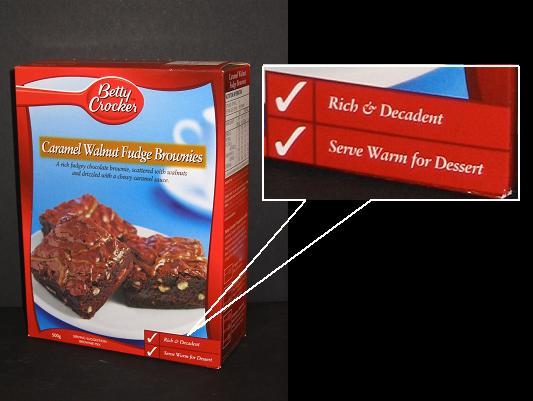
Ticks are taking over the supermarket shelves. Over recent years a tick (and very often a white tick on a red background) has come to denote first any nutritional claim ("97% fat free"), then any functional claim ("baked not fried"), and now any claim at all (just look at the picture above)! I picked up a box of Betty Crocker Brownie Mix in a supermarket last week, having noticed the white ticks on red - a familiar cue that I have come to associate with at least some level of nutritional information or endorsement. I (honestly) assumed that Betty Crocker was making some health claim - low fat, low GI, high fibre, etc. But no! Apparently, in this age of "premiumisation", when it's OK to be indulgent, even a claim of being "Rich and decadent" deserves a tick! Even Coles has commandeered the tick as the central feature of its new master housebrand "You'll love".

Don't get me wrong: there's absolutely no doubt in my mind that the Heart Foundation has built brand equity in the Tick. In fact, I'm sure that many consumers have come to rely on the Tick - just ask the copycats why they have plastered ticks all over their packaging. Even those who pay to use the official Heart Foundation Tick often stretch the friendship - Parmalat, owner of the Rev brand of low-fat milk, uses two smaller ticks right alongside the Tick to denote a claim of being a "rich source of Calcium (and) Protein".

The Heart Foundation clearly understands what the Tick is supposed to do: "Consumers rely on the Heart Foundation Tick to help them to make healthier food choices quickly and easily (my emphasis)", as they say on their website. They want us to trust the endorsement and respond to the Tick on the basis that we believe that "All Tick approved products represent a healthier choice".

Research might well show that consumers are - rationally - aware of the Tick and the "Pick The Tick" campaign, and even of the underlying objectives of the program. But we are talking here about frequent, highly routine purchases in a supermarket context. Studies of consumer behaviour in supermarkets have found average shopping times of less than 12 seconds per item, including the time taken to walk down an aisle and approach the display. Under these conditions, recognition of salient brand cues - basic colours, shapes, symbols, colour schemes and product Gestalt - is critical.

Consumers expect that these brand cues will make decision-making easier by acting as a kind of shorthand, not only for manufacturer or origin, but also for intangible associations like the trust that comes from third-party endorsement.

Faced with evidence of growing consumer confusion, the Heart Foundation has been encouraging us to make more of an effort to ensure that we are picking up the RIGHT tick. Unfortunately, once you have to tell consumers to trust SOME ticks but not others, you completely undermine their confidence and destroy the value of the Tick as a symbol: decision-making becomes more difficult and the perceived risk (of making the wrong choice) is higher.

On any critical appraisal, the Heart Foundation has failed to protect its intellectual property and it continues to suffer from very significant "leakage" of its marketing investment. Part of this stems from a poor choice of vehicle for this investment in the first place. The 1988 Trade Mark registrations for what is described as a "Correct symbol, in disc, in circle" note explicitly that "Registration gives no right to the exclusive use of the device of a TICK (CORRECT SYMBOL)". In other words, it has been known for nearly 20 years that a "tick" was too generic a choice - the Foundation can't "own" a symbol that is used so widely and non-specifically.

Secondly (and strangely, given the endorsement on the registration), it seems the Heart Foundation took a long time to recognise that it had a problem with copycat ticks. It should not have come as a surprise that other marketers would seek to exploit and leverage brand equity any way they could. But it appears that the Foundation made no regulatory attempts to stop others appropriating equity in the Tick until 1997 - that's when it lodged a Trade Mark application for a white tick on a disc of solid colour but without the words "National Heart Foundation Approved" around it. This application was rejected pretty swiftly.

The Foundation should act now - and quickly, before others like Betty Crocker completely undermine consumer brand knowledge and hence completely devalue the program - to shore up its equity in its brand elements, and plug the leaks. There are many conceivable ways to create a modified branding device that is simple, distinctive, meaningful and (above all) protectable, yet builds on what equity remains in the Tick. I'd love to hear from the Heart Foundation if they are interested...

28 August 2006

Attention Cummins: Don't hold others back... Resign the Connex account now!


OPEN ON MCU OF A GROUP OF ADVERTISING STRATEGY PLANNERS AND CREATIVES FROM SEVERAL DIFFERENT MELBOURNE AGENCIES. THEY ARE OBVIOUSLY TALENTED AND CAPABLE OF DOING GREAT WORK. CARRYING PORTFOLIOS AND STORYBOARDS, THEY ARE TRYING TO ENTER THE OFFICES OF MELBOURNE TRAIN OPERATOR CONNEX.

MUSIC FADES UP: OBSCURE TRANSYLVANIAN FUNERAL LAMENT.

CAMERA PULLS BACK TO REVEAL THAT THE TALENTED GROUP IS BEING RESTRAINED BY ANOTHER GROUP. SELF-INDULGENT CREATIVES FROM CUMMINS AND PARTNERS, THIS SECOND GROUP IS DESPERATELY GRABBING AT THE ANKLES OF THE FIRST.

ORDINARY VICTORIAN COMMUTERS LOOK ON, TOTALLY PERPLEXED.

Connex launched its Don't hold others back ad campaign on 13 August. According to the Connex press release, "the centrepiece of the campaign are (sic) TV ads that can only be described as intriguing".

Only as intriguing?!! You're kidding, right? From my first viewing of the campaign, I'm afraid numerous other adjectives came to mind!

This is a campaign designed to tell commuters that it's their fault Connex trains don't run on time more often. If you decide this is the right thing to be telling commuters (and I'm not at all certain that it is), it sets up a communications challenge that calls for brutal honesty and self-reflection on the part of the advertiser. You have to be prepared to disarm commuters' natural counter-arguments first - by acknowledging your own shortcomings - before you can begin to hope for a fair hearing. And your message needs to be delivered with a very high degree of empathy and, probably, ironic humour.

Cummins & Partners' creative strategy fails on both counts. The choice of black & white cinematography, the funereal music and the images themselves evoke Stalinist Russia - they are cold and there is not a jot of empathy. Then the message "tag" is delivered not by a human being, or even a human voice, but by a sign on the end of the platform - a piece of totalitarian bureaucracy worthy of Orwell's "thought police". There's no light at the end of the tunnel: the depiction of the problem is dark and heavy-handed, but the solution is just a sign telling us how we should think and behave.

Let's face it, we're not talking here about HIV/AIDS in the 1980s. A campaign to encourage commuters to contribute to the shared goal of helping the trains run on time doesn't exactly call for the Grim Reaper.