31 May 2009

Fyna takes the fun out of Wizz Fizz

Wizz Fizz - the sugary sherbet treat that comes in single serve packets, each with a little spoon - has undergone a bizarre package redesign that makes it far more conservative and wussy.
Yes, believe it or not, that's the OLD pack on the left and the NEW pack on the right.

In my experience, kids loved the freaky monster graphics of the most recent packaging. But the new look is tame - the colour scheme is muted, the fonts and graphic elements far less interesting, and the monsters are replaced with lame-looking kids.

Why would brand owner Fyna Foods make their product apparently less interesting and exciting for kids?

To me, all the clues add up to a ridiculous effort by Fyna to be seen as more "responsible", perhaps under pressure from nutritionists and those who would censor all marketing communications aimed at children (including product packaging).

The most telling of these clues is the amount of pack "real estate" - somewhere near 50% - now given over to "health claims". We are now told that Wizz Fizz is 100% fat free, gluten free, dairy free and contains no artificial flavours or colours.

Huh? Did anyone ever imagine that Wizz Fizz sherbet contained anything other than sugar, bicarb and citric acid? Do parents really need to be reassured that it contains no fat? Parents of kids with allergies and intolerances to dairy and gluten would already be checking the ingredients list, so why make these claims so prominent?

This whole thing smacks of the same "strategy" that has brought Coca-Cola unstuck through its ridiculous and misleading (that's the ACCC, not me) "Mythbusting" advertorials last year featuring Kerry Armstrong. I've still seen nothing that justified Coke's defensive stance in the first place - it was all wrong strategically.

Nor can I see any reason why Fyna should be taking the fun out of Wizz Fizz.

13 March 2009

Red Bull advertising gets a harder edge


A new TV ad for Red Bull screening in Australia appears to be explicitly linking the guarana and caffeine-laced beverage to a claim of enhanced male sexual performance.

Red Bull’s long-running ad campaign featuring hand-drawn cartoons has consistently communicated the product promise that Red Bull “gives you wiiings”. Often this idea has been depicted literally, as the cartoon protagonists sprout wings allowing them to fly out of trouble or perform at higher levels.

Leading marketing academic Professor Kevin Lane Keller, in a comprehensive case study of the brand, writes that Red Bull’s ads were very effective “because they clearly communicated product benefits without promising specific physiological results”. However, although it looks similar, Red Bull’s new ad – which I saw for the first time this week – goes way beyond this well-established advertising formula.

The setting is a nude beach. A young woman is lying, presumably naked, reading a newspaper. A man arrives and asks her if it’s OK if he sets up next to her (his genitals are obscured by a horizontal black rectangle). They have a brief conversation and she offers him a can of Red Bull. He has a drink and immediately develops an erection, depicted by a change in angle of the black rectangle. While he appears to be embarrassed, she clearly approves. The ad is tagged in the usual manner: “Red Bull gives you wiiings”.

Why will this ad cause problems for Red Bull?

It’s not that the subject matter of the ad could cause offence – it’s a cartoon, after all, and the erection is implied (although there’s nothing equivocal about it). It’s not even that the tone is creepy and sleazy – erections on a nude beach are a bit Benny Hill-ish at the best of times.

The real problem here is that this ad makes no bones about what physiological benefit is being promised. It cannot be interpreted other than as a literal claim that Red Bull causes or enhances erection.

While medical opinion would suggest the opposite if anything (excessive caffeine intake is sometimes listed as contributing to erectile dysfunction), the internet is full of anecdotes, opinions and myths linking Red Bull to sexual performance. There are even YouTube testimonials to its power (WARNING: EXPLICIT CONTENT AND LANGUAGE. DEFINITELY NOT SAFE FOR WORK, KIDS, etc.).

Is Red Bull seeking to exploit internet rumours and gossip? That would be dicey strategy for any well-established brand.

But there are more serious legal issues here. What looks like an unequivocal and explicit claim for beneficial effects on male sexual function – or any physiological effect for that matter – would normally need to be validated by evidence, or Red Bull could be found to have breached regulations around the promotion of therapeutic goods.

The Therapeutic Goods Administration defines as a "therapeutic good" any product which is represented in any way to be, or is likely to be taken to be, for use... in connection with preventing, diagnosing, curing or alleviating a disease, ailment, defect or injury... (or) influencing inhibiting or modifying a physiological process".

In other words, would the Red Bull ad stand up in court?

10 March 2009

Why some brands should NOT be on Twitter


In the few short weeks I’ve been on Twitter (@downesy), I’ve already seen and followed dozens of posted links to articles about brands and Twitter. These have ranged from short and relatively obscure blog posts to serious articles by respected commentators in the advertising and marketing trade press. Many of them are interesting and have valid and useful points to make and share about brands on Twitter. But I’ve found it increasingly disturbing that these articles often share an underlying premise that goes unspoken and therefore unchallenged.

That premise is that brands should – indeed some go far as to say MUST – have a presence on Twitter.

OK, Twitter is new and buzzing. Yes, Twitter users are enthusiastic, zealous even, and great evangelists for this exciting new communications medium. Indeed, it seems like a very significant proportion of the traffic on Twitter is about Twitter. But being new, fast, powerful and exciting – like a Lamborghini perhaps – doesn’t mean it’s for everyone. Nor, indeed, does it make it right for every brand. The first – strategic – question any brand manager, agency strategy planner or “digital brand strategist” should be asking is not “Quick, how can we get our brand on Twitter?” but rather “How could being on Twitter help our brand?”

If you can’t answer the second question immediately, then there’s probably little point, cyber-squatting arguments apart (i.e. secure the brand’s @ identity before someone else “fakes” it), rushing around and appointing someone as the brand’s Twitter monitor and plunging headlong into the (ahem) Twitterverse.

And don’t be surprised or ashamed if you can’t answer the second question definitively even after lengthy, open-minded strategic consideration. It’s not a question that many brands can answer yet, if they are honest about it.

“What the hell, shouldn’t we just go for it anyway?” I hear you asking. Not necessarily – it may be that your brand should NOT be on Twitter, at least not yet and maybe not ever, for one or more of the following reasons.

  1. Twitter users are not a target audience for your brand. A disciplined approach to customer segmentation dictates that you target some segments and choose not to serve others. Currently, the few million users of Twitter around the world represent a pretty distinctive segment when viewed along demographic, behavioural and psychographic lines. They are an attractive audience for some brands, but not for others. Should a brand therefore bother with Twitter if it is targeting people with a very low prevalence of Twitter use? Well, not if it diverts strategic resources (people, money and management focus) away from other priorities or if it has the potential to undermine more core communication messages and initiatives.
  2. Twitter isn’t right for your brand’s personality. Popular individuals on Twitter have distinctive personalities and tones of voice. In the case of celebrities or people we know offline, these typically align with their real-life personae, or at least reflect parts of their personalities that we recognize (it’s amazing what the discipline of 140 characters can unleash in some people).
    But we all know people who would simply be boring on Twitter – love ’em to death, but it’s just not their style. Likewise, there are brands – even brands we love – that would also be boring or inappropriate on Twitter.
    Brand personality and values have to be built from within. Merely being on Twitter doesn’t automatically confer on a brand attributes like “cool” and “digitally savvy” if, indeed, that’s what you want for the brand. To assume otherwise would be to set the brand up for (dare I say) “epic fail”.
  3. Your brand doesn’t speak “tweet”. Many brands have succeeded in communicating distinctive positioning and personality through long-running campaigns using (for example) long-copy print ads, or emotion-laden cinematic TV commercials, or quirky viral and outdoor media. That doesn’t mean the brand is stuck with these media, these tactics and this tone of voice forever, but you must ask whether the limitations of Twitter allow your brand to use a voice that’s congruent with positioning and other aspects of the marcoms mix. Or is 140 characters and the witty, sometimes arch, off-the-cuff Twitter style just not where your brand is coming from?
  4. People like your brand but don’t want to follow it on Twitter. I have lots of friends who aren’t on Facebook or Twitter. Just because I now use Facebook and Twitter a lot doesn’t mean those people are no longer my friends – we have other ways of keeping in touch and relating.
    The same goes for brands. Some of my favorite brands just don’t feel like they belong on Twitter or are not yet ready for Twitter.
  5. Your brand becomes a freaking nuisance on Twitter. If your brand has little or nothing of relevance to say but keeps tweeting away regardless, even the most loyal consumers will begin to ignore it and may ultimately resent it and choose to stop following it. Haven’t we all “unfriended” someone because they kept bombarding us with stupid zombie requests?
    Enraptured with Twitter and all its power and possibility, long-time ad people are sometimes forgetting concepts like wear-out. There are plenty of cases where excessive exposure to otherwise likeable ads has turned consumers off a brand and there’s nothing magical about Twitter that will prevent that from happening.
  6. People who aren’t into your brand offline just aren't that into you. Being on Twitter may get your brand extra attention and extra opportunities to impress but it’s unlikely to make people love your brand if they don’t like it in the real world.
  7. Even if people do like following your brand on Twitter, it doesn't change anything. Twitter should be a consideration in overall brand strategy, not drive brand strategy. What strategic objectives are you trying to achieve using Twitter? Could they be better met through other tactics and other media? And don’t ignore the potential downside risks of being on Twitter, especially if you don’t have the rest of the marketing mix right.
  8. The rest of the brand’s service delivery and marketing infrastructure can’t support promises made or implied by a Twitter presence. I’ve had one great service experience via Twitter (from Google, after I tweeted a complaint about Google Toolbar out into the ether and got a reply from the Google Toolbar Grand Poobah himself in California). But the same didn’t happen when I tweeted about Telstra BigPond. In fact, nothing happened. And that’s fine, but I would be very annoyed to see a stream of semi-promotional crap from Telstra on Twitter when I can’t get them on the phone inside 30 minutes to talk about real problems with my service and my bill.
    I can also envisage situations where Twitter might serve to exacerbate poor service experiences and then broadcast them to the world. A personal text message from an airline telling you that your flight is cancelled and suggesting you get to the airport for an earlier one can be an extremely valuable addition to the service experience. But the same doesn’t necessarily go for Twitter. If you’ve ever been at Sydney Airport (as I have) on a day when Qantas domestic has a total meltdown due to weather, then a Twitter stream of delays and confusion could be an absolute PR disaster. On the other hand, knowing that there are problems but finding no mention of it on a Qantas Twitter profile would also undermine confidence and trust.

People with a vested interest in one particular medium – and that goes for TV, radio, newspapers, etc. and not just “digital” – have always sought, and will continue to seek, to highlight ways in which your brand could use their medium ahead of any others. But based on what I’ve seen so far, some people who glory in titles like “digital brand strategist” need to extract the digit and focus first on the brand.

04 March 2009

Trujillo and racism: My reply to Harry Mavros in full


Harry Mavros wrote in reply to my two recent articles in Crikey, in which I was described aspects of the media treatment of Telstra CEO Sol Trujillo as employing racist stereotypes.

The following is the full text of my reply to Mavros.

I commend Harry Mavros for approaching the issue with some structure and intellectual rigour, and for playing the ball not the man. However, I’m sure we both deplore and reject racism not because of its underlying motivations but because of its awful consequences. While I acknowledge the distinction Mavros draws between “vulgar parochialism” and racism, I am far less concerned about issues of definition (those to which I referred as “technicalities”) than I am about the effects.

Racism and vulgar parochialism are fellow travelers – Mavros acknowledges that both produce the same kinds of derision of culture and appearance – and most Australians can’t tell an epiphenomenon from an epiglottis. The argument isn’t about whether cartoonists and sub-editors are motivated by racism (I don’t believe they are) but whether their actions could promote racism.

We appear to be in furious agreement that Knight's Trujillo cartoon is discriminatory and vulgar. But, as I made clear in both of my recent pieces (and my 2006 Crikey article), last Friday’s cartoon was just the latest episode in a long and troubling history. Sections of the Australian media have treated Mr Trujillo in this discriminatory and vulgar manner from the time of his appointment right through to the announcement of his departure.

This and other cartoons, “cute” headlines like “Si senor”, nicknames like the “Three Amigos”, and radio stations playing the Mexican Hat Dance whenever his name is mentioned may look benign when considered individually. But for a very significant proportion of the Australian population, each of these repeated pairings – of Trujillo with a false, vulgar and discriminatory (Mavros's words) national and cultural stereotype – leverages existing prejudices and has the potential to engender fixed and absolute beliefs about racial inferiority.

By humorously referring to Victorians as “Mexicans” (i.e. from “south of the border”), Sydneysiders have long tapped into the “Mexican” racial stereotype in order to imply, albeit gently, that Victorians are intellectually inferior, slow and lazy.

I have interviewed many Australian consumers who, based on the cartoon and movie stereotypes on which they have been raised, and bolstered by the information they get from trusted contemporary media sources, believe that: (i) Sol Trujillo is “a Mexican”; (ii) “Mexicans” are intrinsically (culturally, genetically, whatever) inferior to other “races” in intellect, competence and trustworthiness; and (iii) as a “Mexican”, Sol Trujillo was a poor choice as Telstra CEO and an incompetent manager.

These people often have no basis for assessing Trujillo’s performance objectively. They see and hear others making fun of him because he’s “a Mexican” and, linking this to other (perhaps more reasoned) criticism in the media, make racially-based attributions about the reasons for his incompetence.Average German citizens and soldiers probably didn’t consider Jews genetically inferior until encouraged to believe this by Nazi propagandists. Indeed, they had to reject evidence to the contrary, namely that Jews in Germany included academics, musicians, scientists and business leaders.

But the Nazis didn’t need genotyping to convince other Germans that Jews were racially inferior. They simply heaped scorn on their appearance and cultural and religious practices. These were the tangible artefacts that “proved” their genetic inferiority: “They look funny and dress funny, they act strange, hence they are inferior.”

I am disturbed to have been accused by Mavros of recklessness for having raised the issue of racism. To deny racism on the basis of a purist argument about definitions and motivations is to be recklessly indifferent to the potential consequences of racial stereotypes and derision in the media.

22 February 2009

Victorian bushfires: Which brands are rising from the ashes?


[Note: This article is not intended to be distasteful or to cause offence. I’m not suggesting that anybody “wins” or has sought to “win” from tragedies like September 11 or Black Saturday. I’m merely applying a marketing and brand management perspective to what often happens in the wake of such events.]

Contemporary approaches to consumer behaviour view brands as a key way in which humans beings categorise the modern world, and a basis for sharing important cultural concepts and experiences. It’s not surprising, then, that new brands emerge and others are strengthened or damaged in the context of major events like disasters and wars.

This was certainly apparent in the days and weeks following the terrorist attacks in the US on 11 September 2001.

First were the attacks themselves and their immediate consequences. It didn’t take long before “September 11”and “9/11” became the two names used relatively interchangeably, especially in the US. No reference to a year is necessary – say “September 11” or “nine-eleven” and people know instantly to what you are referring.

Then came the groups, institutions and individuals whose brand associations, imagery and equity changed in the wake of the attacks and the tragedy.

Consider al-Qaeda and Osama bin Laden. It’s fair to say that neither was a household name before 9/11, especially not outside the US. Now, for many in the West, they stand for evil – a willingness to deliberately sacrifice thousands of innocent civilians and to horrify and terrorise whole populations in the name of a dubious cause. To be “linked to al-Qaeda” or have “trained with al-Qaeda” is to be tarred with the same brush.

The New York Police Department, with whom New Yorkers had sometimes had an uneasy relationship over the decades, and the Fire Department of New York were rightly hailed as heroes of 9/11 for their extraordinary responses and selfless sacrifice. Millions of consumers have bought T-shirts and caps bearing the acronyms NYPD and FDNY out of admiration and genuine empathy.

As a focal point for New York’s response to the attacks and for New Yorkers in general, Mayor Rudy Giuliani became a national and international figure. The boost to his brand equity might have been sufficient to take him to the White House had other challenges and challengers not appeared – not that he would have sought to manipulate the tragedy of 9/11 for political advantage.

But there is no doubt that George W. Bush did choose to leverage the powerful brand imagery of the 9/11 attacks in launching the war on terror and, in particular, in justifying the invasion of Iraq. This has come to be seen as a misuse or misrepresentation of 9/11 and was one of many things that came back to haunt Bush in the later years of his presidency.

Now in Victoria and, indeed, across Australia, it has been interesting to observe some of the same phenomena in action – the emergence and re-making of some brands in the wake of the terrible bushfires of Saturday 7 February.

First, there’s the issue of what to call the fires. While “Ash Wednesday” took root quickly in the Australian consciousness after the 1983 fires, I get the sense that the name “Black Saturday” hasn’t yet become embedded. Of course, it doesn’t have the head start that “Black Friday” (1939) and “Ash Wednesday” had, both being names that were already in popular use in other contexts.

Perhaps the use of the name “Black Saturday” in speeches for the national day of mourning on Sunday 22 February – and, in particular, in PM Kevin Rudd’s official address – will get it over the “tipping point” of public awareness and acceptance.

Which organizational and individual brands have emerged strengthened from the ashes of Black Saturday?

Most prominent must be the Country Fire Authority. A continuous flow of words and pictures have reminded us what horrors the members of the CFA confronted both in fighting the firestorm and, all too often, as the first to come upon the unimaginable human consequences. The discovery that the picture of a CFA officer giving a koala a drink was from before Black Saturday did nothing to diminish the respect the organisation earned.

The fact that so many are volunteers is a critical part of the CFA’s brand identity and values and our response to the CFA brand. In his speech on Sunday, Rudd acknowledged this brand imagery and how it might resonate for Australians in the future when he referred to “a new army of heroes where the yellow helmet evokes the same reverence as the slouch hat of old”.

Although Rudd has been chief mourner, it’s not clear whether this has had much impact on his brand image. On the other hand, the brand of Victorian premier John Brumby has had a very obvious boost – this is not to suggest, of course, that he would ever have wished to gain brand equity in this most tragic of ways. My observations suggest that over the past two weeks, as his real personality and humanity have been allowed to come to the fore, many Victorians have warmed to a man who was once widely considered too cold and distant to be electable as Premier. Political commentators have made the same observation.

As the organization at the centre of the major fundraising appeal and at the heart of relief and recovery efforts, the Red Cross has had a significant boost to its salience in the mind of the average Australian. But then, of course, that is its fate – to be prominent at times of disaster, tragedy and great need, and far less visible the rest of the time.

Have any brands lost ground? As some people have cast about for someone to blame for the tragedy, “The Greens” (and/or “greenies” in general) and the Shire of Nillumbik have been two early targets of negative sentiment in regard to planning regulations and processes. These will no doubt be an area of inquiry for the Royal Commission.

Last but not least are the communities like Kinglake, Marysville, Strathewen, Flowerdale and Calignee, many of which may have been unfamiliar names even to Melburnians before this disaster, but now immediately call to mind the horror of the fatal firestorm. This is not necessarily the kind of brand association that a town wants – just ask the people of Lockerbie in Scotland, whose town even 20 years later is known only for the bombing of Pan Am Flight 103.

But, as Kevin Rudd noted on Sunday, these names and others are now “etched deep in the nation's memory”.

15 May 2008

Passive voice makes me aggressive!


Ads running on Melbourne morning radio this week re the impending closure of the Montague Street on-ramp to the CityLink tollway included the following line in the serious voice-over:
"It is encouraged motorists plan their trip with alternate routes"

I think I’ve seen this message once before… on a Chinese T-shirt. If CityLink is going to pay real money for spots like this, surely they can also afford a copywriter who’s familiar with English.

19 December 2007

Market research gets tougher as suggers clog the phone lines

As published in Crikey! on 14 December 2007

The phone rings. You answer and there’s that tell-tale two seconds of call-centre ambience before you are greeted by name:
"We’re just doing a 40-second survey on holiday habits…"
"Just a quick survey about people’s telephone services…"
Don’t be fooled: not everything that’s a "survey" is research. Depressingly often, it’s what the market research industry calls sugging (a loose acronym for "selling under the guise of research"), fugging ("fundraising…") or dugging ("databasing…").

Although long recognised as abusing the rights and trust of the public and often constituting misleading and deceptive conduct under Section 52 of the Trade Practices Act, sugging and its fellow travellers appear to be on the increase in Australia. In the past week alone, I have received three sugging calls at home, and it’s a fair bet that many of the hang-ups on my answering machine were also from suggers.

The classic example of sugging is the call that starts with "We’re just doing a survey in your area…" and eventually, either during the same call or a few days or weeks later, leads to an approach, invitation or straight-out sales pitch.

Sometimes you’re told you will go into some kind of prize draw to thank you for participating in the "survey". Sure enough, a few days or weeks later, there’s a second call and – wowee! – you won a weekend away at a timeshare resort. Of course, there’s a catch: in order to claim your prize, you have to attend a lengthy sales presentation and agree to be hassled for months if not years to come.

More disturbing is the call that purports to be a survey but actually consists of a series of increasingly leading or pushy questions about your current phone bill or mortgage repayments. Most consumers will recognise that a question like "Were you aware there’s now a way that you can save thousands on your mortgage?" is not legitimate market research. But by this stage, it’s often too late – you’ve already taken the bait, voluntarily divulged some personal information and you’re on the back foot.

Other times, you are called a few weeks later and actually reminded of the responses you gave. "Remember you told us X and Y about your preferred holiday destination? Well, we thought you might be interested in this once-in-a-lifetime opportunity..."

This would be a contemptible breach of privacy and ethical provisions in genuine research, which is undertaken on the basis that complete anonymity of the research respondent is strictly preserved. As the code of the Australian Marketing and Social Research Society (AMSRS) makes clear, any situation in which the identity and personal details of the people contacted are to be used for individual selling, promotional, fundraising or other non-research purposes "can under no circumstances be regarded as market research".

My own experience this week suggests that, like other forms of telemarketing, sugging calls can come from on-shore and off-shore sites. A call I received from the Stingray International Survey Centre – which was presented as a "quick survey" on my telephone use – came from the Mercury Blue telemarketing call centre in Mount Barker, South Australia. The caller did not and could not tell me how my data were going to be used, what were my rights under privacy provisions, or who was the sponsor of the research. Neither could (or would) the "supervisor".

The Mercury Blue website describes their outbound call services as including "direct sales campaigns, database updates, qualified appointment setting, surveys, database management, after sales customer service calls (and) product up-selling". Perhaps needless to say, Mercury Blue is not listed as a member of the Association of Market & Social Research Organisations (AMSRO).

The "40-second survey on holiday habits" was a call from a telemarketing organisation in Angeles City, Philippines, whose operator and "supervisor" were unable to understand my simple questions about the integrity of my personal information and the uses to which my data would be put. Off-shore suggers may be more problematic: do the misleading and deceptive conduct provisions of the Australian Trade Practices Act apply to a call placed from overseas on behalf of an overseas company, and can the Act be enforced in these circumstances?

But even if suggers are caught and punished by the law, and consumers recognise when they’ve been sugged, fugged or dugged, there’s a significant downside for the market research industry. Those who’ve been burned by suggers are much more likely to reject future requests to participate in genuine research.

Research conducted by the AMSRS has shown that Australian consumers are broadly supportive of genuine research and do differentiate between telemarketers and market researchers, but sugging muddies the waters by deliberately blurring this distinction. Some research fieldworkers are reporting increasing resistance from consumers who feel they’ve been misled and no longer known who to trust when it comes to "surveys".

The biggest problem is that almost all sugging goes unreported. Unsolicited calls of any kind are viewed by consumers not only as a nuisance but with increasing disgust and anger, but few can be bothered taking the additional time and effort either to check the bona fides of a purported research call with the AMSRS Surveyline (1300 364 830) or to report offenders to the ACCC.

Authorities like the ACCC must step up proactive efforts to detect and stop suggers and to alert consumers to the problem. It’s time we all told these offenders to take their fugging "surveys" and shove ‘em.

29 November 2007

Memo to middle-aged cyclists: Please, no sausage and eggs with my latte!


(As published in Crikey! Thursday 29 November 2007)

"Cycling is the new golf."

It’s an observation that’s been around long enough now to be deemed a cliché. I’ve even contributed to its perpetuation myself, trotting it out on more than one occasion when it seemed relevant.

Like other clichés, it contains some useful truths. Indeed, as has been the case with golf for decades, some business people (almost exclusively male) are using cycling for networking, perhaps not while they’re puffing uphill, but certainly at suburban or bayside coffee shops mid- or post-ride.

Furthermore, by taking up cycling, men get a whole pannier-load of further opportunities to compete on the basis of the size, power and expensiveness of their equipment. As a local golf blogger has noted, cycling – like golf – allows the cashed-up participant to indulge himself with ridiculously overpriced technology, specified far in excess of what’s required, that won’t actually improve performance but looks good and makes others go "oooooooh".

But lately I’ve realised that there is a great deal about cycling that isn't like golf at all. The main difference – and the most obvious when you think about it – is that golf takes place in private among consenting adult foursomes, while cycling is a very – alarmingly – public pastime.

We may find the golfer’s taste in plaid pants and Argyle sweaters somewhat dubious, but we generally don’t have to look at them. They’re out there somewhere, several fairways away from civilisation or cloistered in the clubhouse.

By contrast, in many parts of Melbourne and, I’m guessing, other cities, you can’t get to the counter to order your weekend caffe latte without pushing past a large group of sweaty middle-aged guys in tight, gaudy clobber. For the non-cyclist, cycling is a pursuit that’s a lot more "in your face" – literally – than golf.

Golf may be elitist but at least plus-fours are loose in the crotch. When I put down my coffee and look up from the job ads in the early news pages of Saturday’s paper, I frequently find myself eyeballing a different kind of executive package. Bike shorts clearly aren’t for everyone: as noted famously in the movie Hackers, "Spandex (Lycra) is a privilege, not a right".

Then there are the jerseys. Apparently it’s a requirement that every piece of cycling apparel sold in Australia must carry at least half a dozen logos for brands we’ve never heard of. There are obscure European banks (sorry, "banques") and mobile phone companies, with names like "Clafoutis" and "Telesavalas", together with cars from former Soviet republics. This really amounts to visual pollution and an uncalled-for intrusion in our suburbs and bakery cafés.

I believe it’s time for the non-cycling community to rise up and demand that middle-aged cyclists take their hobby off the roads and onto the velodrome. Perhaps we could ask activist Naomi Klein to take up the cause: for the executive cyclist, the message should be "No Logo", "No Lycra" and "No Latte".

03 July 2007

Is justice colour blind?

Judges in the highest Court in the land have shown that, like all of us, they may be prey to the seductive effects of branding. And one of the world’s biggest brands may have been the loser.

The High Court recently refused BP leave to appeal an earlier Federal Court decision rejecting the petroleum giant’s application for a trade mark for the colour green. But remarks made during the hearing suggest that the judges at times got caught up in the current frenzy of “green” branding in the marketplace.

Consumers are now inundated with “green” claims, with everyone from energy utilities, banks and retailers to toilet paper invoking “green” credentials. “Green” has effectively become a brand in its own right. But it’s easy to forget that the word “green” hasn’t always carried this meaning.

When I was growing up, calling someone “green” meant they were raw, immature, untried or naïve. You could be green with envy. And having a “green thumb” meant you were a dab hand in the garden, but by no means a “greenie”. In fact, many gardeners with the greenest thumbs probably burned their incinerators, had no compost bins, didn’t mulch, wasted water and used all kinds of nasty chemicals to keep the indigenous bugs off the exotic ornamentals.

These were evocative and metaphorical uses of the word green… but not the colour green.

BP has been seeking for many years to register the colour green – not the word – as a trade mark in relation to petrol retailing. The High Court hearing in May was basically its last roll of the dice.

Reading the transcript, one could be forgiven for thinking that Justice William Gummow had decided in advance that “green” always has a particular meaning connected with the environment and that BP’s choice of green was related to this meaning, and not to brand identification. His Honour asked David Shavin, QC, appearing for BP:
“What is the… significance of fixing upon green? Trademarks, as we know, can have their attraction and force from an impact that is illusive or evocative upon the viewer. What is the idea here?... What is nature (sic) and healthy about the production or consumption of petroleum products?”

His Honour apparently struggled to follow or accept Mr Shavin’s explanation that the colour green had been chosen years ago by BP for reasons unrelated to what the word green may have come to mean in 2007. Indeed, it had been noted in an earlier trial in the Federal Court that BP has used green in relation to petrol pumps since 1927 in the UK and in Australia since 1954.

Justice Michael Kirby, while acknowledging the history of BP's use of green, remarked that it was:
“a clever colour (for BP) to have chosen so many years ago because it is now very much associated with the environmental movement”.

Was His Honour suggesting that BP, when choosing a colour for its bowsers in 1927, had “cleverly” predicted the meanings that the word “green” would take on 80 years later?

Perhaps it’s understandable that, in the midst of hundreds of volumes of evidence and with an intense focus on complex issues of law and the interpretation of language, both learned judges appear to have confused the word green and the colour green. But the ability to draw such a distinction is surely what the public expects of the ultimate triers of fact.

The national depression initiative chose the name beyondblue to take advantage of one use of the word “blue” to denote human sorrow. That doesn’t stop numerous businesses using, and seeking trade mark protection for, the colour blue in a range of different categories. Luxury jeweller Tiffany has a colour trade mark for its famous blue box, OneSteel for blue fencing wire and Pfizer for the blue colour of its diamond-shaped Viagra tablets. Naturally, none of these companies wants consumers to associate its brand with depression, but clearly none of them is worried that this will happen through their use of the colour blue.

Consumers can and do distinguish all the time between colours as visual brand identity symbols and the possible meanings of the words we use for colours. For example, ask consumers about colours and brands in the rental car category and you’ll find green identifies Europcar (nothing to do with the environment), yellow identifies Hertz (not “cowardly”) and red identifies Avis (not “communist”).

BP’s High Court appeal ultimately failed on a number of legal grounds. But just imagine the outcry if someone in authority had suggested in passing that when Australia Post sought a trade mark for the colour red in relation to postal services it was doing so in order to convey communist sympathies!

26 June 2007

Leisel endorsing Preston Motors? Someone selected the wrong gear!

Dy Dr Stephen Downes, as published in Crikey! on 20 June 2006.
In sports sponsorship terms, swimmer Leisel Jones is a hot property. An Olympian at age 14 in Sydney, she won gold, silver and bronze medals at the Athens Olympics in 2004. Two years later, she followed up with four gold medals at the Melbourne 2006 Commonwealth Games, and was chosen to carry the Australian flag in the closing ceremony.

She’s young, talented and likeable. And just prior to the FINA World Championships in March this year, Swiss watch brand Tag Heuer unveiled an advertising campaign featuring Leisel as it newest – and first Australian – brand ambassador, a role in which she joined Brad Pitt, Uma Thurman, Maria Sharapova, Tiger Woods, Steve McQueen and various F1 drivers. (Interestingly, you won't find her listed on the "Stars and Glamour" page of the Tag Heuer website.)

In the latest issue of the Sweeney Sports Report , which computes a kind of sponsorship “order of merit” based on consumers’ ratings of athletes’ suitability as brand endorsers, Leisel Jones gained 7 “Sweeney points” to be ranked equal 18th with Essendon AFL veteran James Hird, race driver Mark Skaife and Socceroo Tim Cahill. This puts her ahead of such notables as Lleyton Hewitt, Brownlow Medallist Chris Judd, Socceroo captain Mark Viduka and World Cup cricketer Andrew Symonds.

Given that background, if you were managing or advising Leisel Jones, what car brand would you seek out as the best match for a popular, credible endorser who’s already a glamorous Tag Heuer ambassador? A prestige marque, of course. Something speedy, performance-oriented, highly engineered and European, naturally. BMW, Audi, Mini or Mercedes perhaps?

Guess again.

This week, Leisel popped up on Melbourne free-to-air TV spruiking for local Holden dealer Preston Motors in a cheap and cheerful, “past-its-prime-time” commercial. Sure, she looked pleasant and perky, and she delivered her lines well – as well as you can when the script calls for something corny along the lines of “Dive in to Preston Motors”, repeated several times to camera. And there’s nothing wrong with Preston Motors; it’s an old-time dealership that’s been around since 1912, with its roots in Melbourne’s working-class northern suburbs.

But it’s a bizarre choice for Leisel, given her potential, her Sweeney ranking and her own apparent commercial aspirations just a few weeks ago. When she split with her coach in April this year, The Age reported that her objectives were “to cash in on commercial opportunities in Melbourne” and be with her footballer boyfriend, Marty Pask of the Western Bulldogs. Melbourne was looked upon as “a land of opportunity” and her earning capabilities were set to go “through the roof”.

The chance to do a lame ad for a local car dealer doesn’t look anything like a golden opportunity. And I’m not saying Preston Motors are cheap, but the ad’s script and production values suggest that the fee wouldn’t keep her supplied with Uncle Toby’s oats (another of her sponsors) for terribly long. Perhaps she got a car as “contra”.

But the long-term consequences are potentially much more significant than the simple matter of what Leisel got paid for this particular gig. Becoming known (and possibly ridiculed) for doing poor-quality, small-time or even ill-fitting endorsements can seriously damage an athlete or celebrity’s credibility as a presenter and hence his or her perceived value to marketers as a “co-brand”. It’s been speculated (as reported in Crikey! 21 July 2005) that even Lleyton Hewitt’s high-profile ads for Sorbent, while apparently beneficial to the brand, harmed his chances of maintaining and winning other endorsements by helping (as Inside Sport put it) to “smear (his) reputation permanently through association with loo paper”.

So who is advising Leisel? Who convinced her that becoming a spokesmodel for Preston Motors was a good idea, and why the heck did she agree?

25 May 2007

Why the "WorkChoices" brand is now unemployed


(As published in Crikey!)

In turning its back on the name “WorkChoices” for its industrial relations policy and legislation, as reported late last week , the Howard government is finally acknowledging what can only be regarded as a brand strategy disaster. The new wave of Commonwealth IR advertising does not use the WorkChoices name, and it has also reportedly been dropped from other communications vehicles, including call centre scripts.

Why has WorkChoices failed as a brand name, in spite of the millions spent devising it (it has a distinctly over-workshopped feel), protecting it (via three separate trade marks in nine classes, including this doozy ), and on the website, call centres, and mailouts, not to mention the $45 million spent in the first round of advertising?

Is it simply that the name WorkChoices is so uninspired and pedestrian, or to be even more blunt, “lame”? “Choices” is one of those words, along with “options” and “solutions”, that are appallingly overused in brand and product naming at the moment, especially at the lower end of the market – even the local taxi truck owner-driver now describes his business as “logistics solutions”. You can’t expect consumers to warm to a brand name they feel embarrassed to use. Even the PM himself seemed to be admitting as much last week , when he said: “I don’t always describe it as WorkChoices. I sometimes say industrial relations, I sometimes say workplace relations”. You can bet the marketers of Coke aren’t happy for people to “sometimes” ask for “a cola”.

Or is it because WorkChoices so clearly fails the “Newspeak” test for sincerity in political language? Any reader of Orwell’s 1984 can recognise the absurdity of the Ministry of Truth being responsible for propaganda. So when politicians (or marketers) use a word like “choices”, even the least cynical amongst us is immediately prompted to wonder what choices or rights have actually been taken away. Perhaps the word “choices” itself has become too closely associated with propaganda. Even McDonald’s has made extensive use of it recently: “Deli Choices” is really about the Golden Arches fighting back against competition from Subway, while “Lighter Choices” is about breaking the strong mental association between the McDonald’s brand and fatty, unhealthy food.

Was there ever any hope of success for “WorkChoices” in the first place? Remember “Incentivation”, “Fightback”, “The Things That Matter” and “Knowledge Nation”? You don’t? Well, that’s the point. With an increasingly brand- and advertising literate electorate, attempts to brand political policies seem doomed to fail ever more spectacularly.

It’s not just the millions in wasted taxpayer dollars that should have Howard, Joe Hockey and the architects of the WorkChoices name hanging their heads in shame – there’s a significant political defeat here, too. “WorkChoices” not only failed to fire consumers’ imaginations, but Labor and the unions wouldn’t buy into it, either, maintaining the focus of their own counter-campaigns on phrases like “Howard’s IR laws” and “Your Rights At Work”. Simply walking away from the WorkChoices name at this late stage isn’t likely to allow the Howard government to leave the negative brand associations behind. The new slogan – “Know Where You Stand” – is also ripe for counter-argument and parody, as some bloggers have been quick to point out.

In the right hands, a well-chosen and well-managed brand can be a powerful influencer of perceptions, attitudes and behaviour. But the whole sorry WorkChoices episode seems to confirm that when it comes to branding contentious policy initiatives, you can’t polish a turd.

03 May 2007

I see dead people… in prime time


(Cartoon by Peter Nicholson)

By Stephen Downes, as first published on Crikey! on 26 April 2007

In life, it took a lot to silence Steve Irwin. His unbridled enthusiasm for wildlife and environmental causes and his exuberant turn of phrase made him a magnetic presenter and 24-karat gold talent for US chat shows. And it seems that even death can’t keep the irrepressible Crocodile Hunter quiet.

Several times this week while watching evening TV, I have had the unnerving experience of being enthusiastically invited by Steve himself to visit Australia Zoo on Queensland’s Sunshine Coast. The first time I saw the ad, I thought it was some kind of tribute – I kept waiting for the “R.I.P.” message, the soft focus, the slow-mo footage and a few bars of John Williamson. But no, this is just a regular ad, apparently unaltered from before Irwin’s death last September, and now screening in Melbourne during prime time, a slot where I’m not sure I’ve ever seen it before.

You’d have to say there are few precedents for advertising messages from beyond the grave, especially when the departed spokesperson speaks directly to the viewer.

Although he died in 1989, the late John Meillion’s voice was sampled and re-engineered – with permission from his estate – so that he could keep reminding audiences right through the 1990s that “a hard-earned thirst needs a big cold beer... and the best cold beer is Vic”. But while his voice contributed great character to the brand, entire generations of VB drinkers would have had little or no knowledge of Meillion as an individual or perceived this as a personal endorsement.

On the other hand, Pauline Hanson – on video, direct to camera – told her fellow Australians that “if you are seeing me now, it means that I have been murdered”. Of course, it turned out she wasn’t actually dead at all.

Perhaps the most famous and chilling posthumous presenter was Yul Brynner. After his death from lung cancer in 1985, the American Cancer Society ran ads featuring footage from an interview with Brynner recorded just months earlier (you can see one here). He turned to camera, looked down the barrel and said "Now that I'm gone, I tell you: Don't smoke, whatever you do, just don't smoke." This ad was especially powerful – spine-tingling even – because we knew he was dead (the ad starts with a “super” giving dates of his birth and death) and we realise that he knew he would be dead when the message screened.

You only have to watch the “In Memoriam” sequence at the Oscars each year to recognise the emotional power of images of famous and well-loved people who have recently passed on. Perhaps that’s why I have found it disquieting to watch ads featuring a healthy, “larger than life”, pre-stingray Steve Irwin still spruiking for Australia Zoo in his inimitable fashion.

Of course Steve’s memory and legacy will always be central to the marketing of Australia Zoo and a key attraction for visitors. But I have no doubt many consumers will find the Irwin family’s decision to run the same old ads with the same old Steve surprising and perhaps even inappropriate or disrespectful. After all, immediately after his death the Australian Quarantine and Inspection Service withdrew the entire taxpayer-funded “Quarantine Matters” campaign for which Irwin was spokesperson “as a gesture of respect for Steve and his family” (as reported by the Sydney Morning Herald).

19 April 2007

Are your Harpics showing...?


Back in the 1970s, we all had a good snigger at the Durex joke. Australians knew Durex as a brand of sticky tape but elsewhere in the world it was a condom. This created the premise for hilarious stories about cultural miscommunication. You know the kind of thing: Did you hear about the Australian tourist who went into a chemist shop in London and asked for "a packet of Durex, sticky on both sides"?

And Americans who come here still find it funny that we use Jif to clean the bathroom, because in the US it's a brand of peanut butter... not so good on the porcelain!

Now comes the case of "White & Shine" - perhaps not such a problem for consumers, but a whole lot less amusing for the companies concerned. Macleans - the toothpaste people - and Harpic - the toilet cleaning people - have virtually simultaneously launched product variants with identical names.

While the risk that consumers will be harmed as a result of confusion seems relatively low (although you never know what some people do!), the shared name poses a real business risk for Macleans. No-one who makes toothpaste wants their product to be associated in any way with toilets or even toilet cleaners. Consumers are very sensitive when it comes to oral care products - it's a highly sensory category, as Pond's found when it tried to launch Pond's Toothpaste (as documented in Matt Haig's book "Brand Failures"). It's amazing how many people who hear the name "Pond's Toothpaste" instantly react with a "Yuk!" as they taste and feel greasy Pond's Cold Cream - a powerful association - in their mouths.

Anyway, I say shame on both Macleans and Harpic for choosing such a boringly obvious and descriptive name for a product variant. My prediction for "White & Shine"? Expect the Macleans version to disappear very quickly. Everyone wants white and shiny teeth, but no-one wants to use a dunny brush!

16 April 2007

Update: Planet Ark comes clean!

Crikey! approached Planet Ark for comment on my piece (below) on the origins of its washing powder and got what looks to be a straight and detailed answer from Paul Klymenko, the organisation's Research Director, advising that it's made by a family-owned business in Melbourne. That's very encouraging, in keeping with what Planet Ark seems to be on about... and certainly not something to hide! I hope we soon see some reference to this on both the Planet Ark website and the packaging itself.

09 April 2007

Forbidden planet: Who makes Planet Ark washing powder?


In consumer marketing, green is the new black. It’s no secret that all manner of business and brands not previously known for their "earth-friendliness" are adding a splash of green here and there, and mostly to good effect.

Planet Ark, a green brand that first came to consumer attention more than a decade ago by promoting recycling initiatives, has come a long way from those humble beginnings. Planet Ark is now an impressive consumer brand with high levels of recognition, approval and trust. From a commercial perspective, this means the organisation is ideally placed to capitalise on the current surge of consumer interest in all things green, water-saving and climate-friendly. While early moves in this direction saw Planet Ark as merely an endorser of products like Safe brand toilet paper and Aware laundry powder, the Planet Ark brand has recently assumed centre stage as a consumer product brand in its own right.

My household recently ditched an established national brand in favour of Planet Ark washing powder, and we are pleased with its performance so far. The rather simple and stark orange and blue box is awash with all kinds of information about the product, its ingredients and its environmental and health credentials. Strangely, though, amidst all the detail about cellulose colloids and plant oil surfactants, there’s no indication of where the product is made, or by whom.

Oh, sure, there’s an address – Planet Ark Environmental Products Pty Ltd, based in the Blue Mountains town of Wentworth Falls – but the Planet Ark website lists only eight staff in the Wentworth Falls office. There’s no mention anywhere of the kind of manufacturing and packaging operations required to produce mass-market quantities of a consumer product, nor whether these operations are undertaken in Australia or elsewhere. Neither is there any reference in the Planet Ark organisational structure to supply chain management – the process of sourcing all these non-petrochemical ingredients – nor a logistics and distribution network large enough to supply national supermarket chains.

The extensive FAQs section of the Planet Ark laundry powder website also sheds no light on the issue of who makes it. The nearest it comes is a question that asks Are the products Australian Made & Owned?, to which the answer is Yes they are. Some of the raw materials are not made in Australia so they must be sourced from overseas.

It’s hard to understand why Planet Ark seems so coy about identifying its commercial partners in what looks to be a good product with commendable credentials, especially as it has proclaimed itself "pro-business" from the outset and been transparent about its other business relationships.

Let’s face it, consumers are sufficiently attuned to the business of brand extension to realise that Planet Ark must be contracting other organisations to manufacture, package and distribute its consumer products. Planet Ark "green" shopping bags, for example, are manufactured in China, and the organisation seems quite open about this. We don’t actually believe – or expect – that Planet Ark founders and front people like Jon Dee, Pat Cash and Rebecca Gilling are out in a back room somewhere with their sleeves rolled up, mixing up batches of detergent in plastic rubbish bins.

And surely no consumer would think the less of Planet Ark for contracting another organisation to make and distribute laundry detergent and other consumer products under its brand name, so long as the ingredients and processes are specified and controlled by Planet Ark and are in keeping with its values and not-for-profit status.

Do consumers really care who makes products, how and where? Traditionally, and for so-called "low involvement" categories, the answer was mainly "no". But recent trends in fast-moving consumer goods marketing have turned that around, especially among some significant customer segments. We are now encouraged – indeed, trained – to look for information and read the fine print: Is it made in Australia? Is it dolphin-friendly? Is it low GI and organic? Does it contain CFCs, artificial sweeteners, colours and flavours? Does it contain gluten or traces of nuts?

Ironically, it’s the very fact that Planet Ark provides so much product detail on its washing powder pack that makes the absence of manufacturing information stand out so starkly for me. But am I just overly suspicious and is the lack of disclosure merely an oversight? Or – behind the hundreds of words on biodegradability, zeolite minerals and being free of phosphates – is there something about the washing powder that Planet Ark would rather we didn’t know?

27 March 2007

Letter to Friends of the ABC re brand names


To: Glenys Stradijot
Friends of the ABC, Victoria

Dear Glenys

Thanks for your thoughtful response to my piece in Crikey re ABC and brand names. Believe it or not, I am a "friend" (with a lower case "f") of the ABC, a regular ABC viewer, listener and contributor (both formally and informally as a talkback caller on radio). I would be grateful if you could share my thoughts in reply with your members – I would be interested to hear what they think.

I’m sure you are correct that a sizeable section of the Australian community supports the principle of keeping the ABC free of advertising. But you are also right when you note that, in an era of what I would call "integrated marketing communications", the distinctions between advertising and other forms of promotion are increasingly blurred. And that’s precisely what makes the ABC’s current practice look so ridiculous.

Leaving aside the Grand Prix (which simply wouldn’t exist without commercial motives), in a week where ABC announcers were not allowed to say that Tasmania had won the "Pura Cup", this "citizen" encountered the following on ABC radio, TV and internet channels:

• ABC radio business news items featuring commentary by "stock market analysts" from Goldman Sachs JB Were and "currency strategists" from Macquarie Bank and ANZ Investment Bank;
• Several minutes of TV footage and dozens of web images showing sponsors’ logos (Ford, Emirates, HSBC, Vodafone, QBE, LG, etc.) on sporting jerseys and boundary line signage across multiple sporting codes;
• Numerous interviews with visiting actors, authors and musicians, all with a commercial property of some sort to promote, like singer-guitarist Tony Joe White, whose latest album we were told "is released by Warner Music" which no doubt sponsored his tour and the limo to Southbank for the interview;
• News items – on radio and online – reporting on a poll conducted and publicised by AC Nielsen – a commercial market research company – showing that 59 per cent of Australians are opposed to the "WorkChoices" industrial relations legislation (a name for which three separate Trade Marks have been applied by the Commonwealth);
• A cerebral palsy fundraiser to be held "at Riverside at Crown", which begs the question of whether mention of a commercial property like Crown is OK when it’s for charity?
• etc.

None of these constitutes "advertising" on the ABC. That is, in none of these cases did the commercial entity pay money to the ABC in exchange for airtime, so the national broadcaster’s conscience can remain clear. Neither, to my knowledge, does National Foods Limited attempt to pay the ABC to say "Pura Cup". Yet, in every one of these instances, there is a clear underlying marketing communications objective to the provision of expert commentary, the availability of a guest for interview or the sponsorship of a charity or community event by a commercial entity. It’s a simple question that I’m asking: Why should AC Nielsen – which benefits commercially from every mention of its name in a credible news service like the ABC’s and no doubt calculates a dollar value for every column inch or second of airtime such a poll generates – be entitled to acknowledgment by our national broadcaster when Telstra and Pura are not?

It’s highly likely that many of the concerned citizens that your organisation represents also support the principle of freedom of speech and are opposed to censorship, especially when it’s arbitrary and not transparent. Unless FABC has a better classification system than I do (and I teach marketing communications to postgraduate students) and you can mount a rational argument as to which of these cases deserve to get to air and which don’t, then I reiterate that refusing ABC announcers permission to say "Telstra Dome" or "Vodafone Arena" is not only unworkable but is a form of censorship of our national broadcaster and hence should be regarded as unconscionable.

Regards,
Stephen Downes

17 March 2007

Double standards at the ABC (Anti-Brand Corporation)


It's been a standing joke for years on the Coodabeen Champions' shows on ABC Radio: the ABC (so the apparent justification goes) is a Government broadcaster and doesn't carry advertising, so no brand names can be mentioned on-air. Of course, it's almost impossible to discuss modern life without reference to brands, so the Coodabeens have become experts at creating elaborate and humorous euphemisms to get around this restriction. In so doing, they clearly illustrate how ridiculous the policy is.

It seemed rather less ridiculous and a lot more bizarre when I was approached last year by ABC Local Radio to do an interview with Helen Razer about whether too much choice makes consumers unhappy (see this earlier blog entry). I was expressly cautioned by the producer not to mention any brand names! Asking a marketer to discuss consumer behaviour and decision-making without mentioning brands is like asking a football commentator not to mention the teams or the players.

But the inconsistency and hypocrisy of this policy was never more obvious than in today's 9 am news bulletin on ABC Local Radio in Melbourne. Back-to-back items referred to (1) the final of the AFL "pre-season cup" to be held "at Docklands" tonight and (2) the relative performances of the Ferrari and Red Bull teams in practice sessions yesterday for the Melbourne Formula 1 Grand Prix.

How can it be inappropriate or unacceptable for the ABC to say "NAB Cup" and "Telstra Dome" but perfectly OK to say "Ferrari" and "Red Bull" in the next breath?

It's a no-brainer that participation by a company like Red Bull in motor racing is entirely about brand positioning. It follows, therefore, that every single mention of the Red Bull racing team on the ABC over the course of the Grand Prix "festival" is a piece of marketing communications initiated by the brand owner. Significant and undeniable mass-market brand positioning objectives also underlie the participation of car makers like Honda, Toyota, BMW, Renault and even Ferrari.

And then ABC motor sports commentator Will Hagon - current holder of the world record for irrelevant, self-aggrandising name-dropping - will spend hours of airtime on "our ABC" rabbiting on about Bridgestone and Michelin tyres and Zylon anti-penetration panels (both trade marks, naturally).

Of course, names like AFL and Formula 1 are themselves highly-protected trade marks and commercial properties. So why aren't ABC announcers instructed to refer instead to "the national Australian Rules football competition" or "the elite international motor sport event being held at Albert Park"?

And, yes, I said "hypocrisy". Consider the ABC's own brands and commercial activities (while it may be "not-for-profit", it most certainly has commercial operations). The national broadcaster (see - I'm not using a brand name) has spawned a number of immensely successful brands: The Wiggles, PlaySchool, Triple J, the Hottest 100, Gardening Australia and The ABC Shop are just a few examples of brands from which the ABC earns revenue directly and through licensing agreements. Every mention of those lovable Bananas in Pyjamas on ABC TV, Radio or websites helps drive profits for a variety of commercial entities that pay the ABC to use the images of B1, B2 and Rat In A Hat.

Don't let's forget that the ABC also does tremendously well out of leveraging the equity of many other brands, both in terms of its programming and via sales through ABC stores: think Little Britain, SeaChange, Planet Earth, etc.

It's time we called things what they really are - let's name names. The bottom line (whoops, that's a bit commercial, isn't it?) is that the ABC's "policy" amounts to arbitrary censorship - it's applied inconsistently and unfairly, and it's entirely unworkable, unnecessary and unwelcome.

26 February 2007

The new Telstra: Boosting staff morale or "morals"?


When you set about transforming an under-performing services marketer, so the thinking goes, often the most important and hardest thing to change is its culture. Organisations like banks and telecoms perform best when the beliefs and behaviours of customer service personnel are aligned with corporate mission and values, and when everyone in the organisation understands his or her role in creating value for both customers and shareholders.

Employees of Telstra, and especially those in "front-line" functions like call centres, have doubtless had a hard time keeping the faith through recent years of struggle, uncertainty and unpopularity. But it looks like Sol Trujillo and Phil Burgess, experts in organisational change, may have succeeded in turning around the culture and boosting staff confidence.

Never mind the broadband technology, I met one of the "Next G" of Telstra employees over the weekend. She was proud of the company, apparently certain of the corporate mission and vision, and unshakeable in her dedication to ensuring Telstra targets the right customers… it’s just that I clearly wasn’t one of them!

My daughter won a mobile phone on Saturday. It came with a Telstra Pre-Paid "bundle". She already has a hand-me-down phone with a pre-paid account, currently with Optus – Telstra had previously been sopping up her unused credit every few weeks, leaving the phone useless in the occasional “emergency” situations for which it is intended.

So we set about switching her over to the funky new handset. Optus told me I needed to call Telstra to "unlock" the new phone so it could be used on another provider’s network.

"You’ll have to pay an unlocking fee," explained the Telstra customer service officer to whom I eventually got through. "For a new phone, that will probably be around $200."

When I said I thought that was a bit steep, especially for a pre-paid phone won by a 12-year-old, she disagreed. Anyway, she said, “I wouldn’t be giving a phone to a 12-year-old.”

Introducing Telstra’s new positioning in mobile telephony: the responsible, adults-only, service provider that knows better than you do whether your child should have a phone. If Telstra intends to put morals ahead of revenue and no longer sell mobile service to parents on behalf of their kids, shouldn’t we have seen some kind of announcement to the ASX?

Not that I got a chance to ask this newly-aligned and empowered Telstra advocate about the company’s strategy. "I actually work for Telstra and I won’t sit here and listen to you criticising them," she said. And there, by mutual consent, the call ended.

23 February 2007

Reply to Karl Treacher on "brand deceit"


I really appreciate Karl Treacher’s reply to my blog on his description of an "audit" that judged Vodafone to be "top of the bad brand behaviour list" because of "brand deceit" (as quoted in B&T magazine, 9 February 2007). However, I’m afraid Karl’s reply simply raises a lot more questions than it answers.

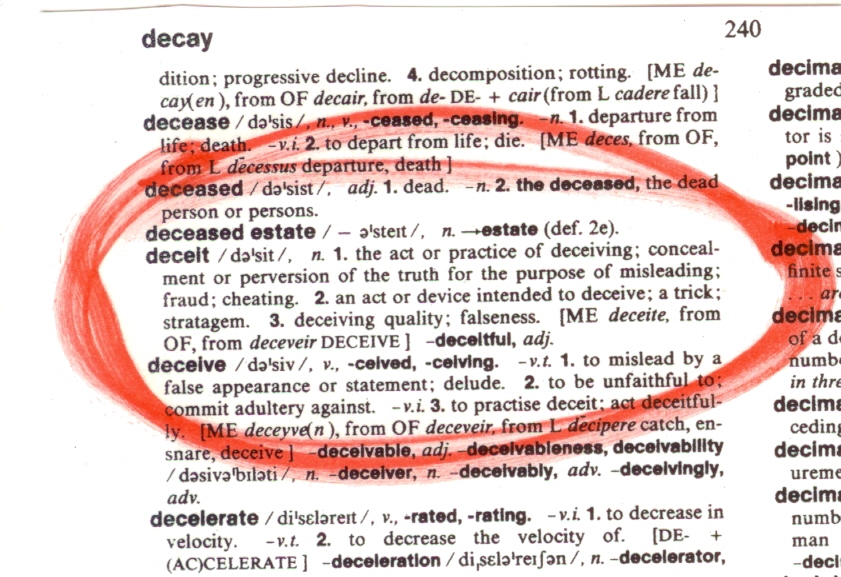
"Deceit" is a very strong word with a very specific meaning. The Macquarie Dictionary defines deceit unambiguously as "the act or practice of deceiving; concealment or perversion of the truth for the purpose of misleading; fraud; cheating".

The B&T story suggested that consumers had rated Vodafone highest on "deceit", but included absolutely no information about the study. In particular, in my original piece, I wondered about the methodology. Well, it was "sound", says Karl: "A 9 month study – man on the street Qual. 7 stores, 10 people / store".

So how were these qual respondents selected? What stores? Was there randomisation? What level of knowledge and experience had the respondents had with each of the categories and brands? In other words, how representative was the sample of the bulk of Australian consumers?

To make a judgment that Vodafone was "top of the list" of badly-behaved brands clearly implies some kind of quantitative assessment and measurement, beyond the findings of qualitative research. Was there any statistical analysis of the positions on the list? For example, how many respondents with a positive view of Vodafone would it have taken to knock them off the top? Two out of the 70? Ten out of 70? Fifty?

And where did deceit come into it? Was this the actual word used by consumers spontaneously (very uncommon in my experience as a qual researcher) to describe a disappointing brand experience, or a term offered to them by the qual interviewers, or was it added in post-fieldwork analysis by the folks at Brand Behaviour? Was the degree of deceit scored and compared by respondents on some kind of scale (in order to arrive at a list of the worst)? Were respondents asked to rank brands (put them in order) in terms of "deceit"? Which brands?

The point is, when you say a brand was "top of the list", then we expect that there’s a list somewhere and an explanation of how they got in that order. Karl’s use of the term "audit" also implies a structured measurement (quantitative methodologies) against some kind of benchmarks, rather than exploration and investigation (qualitative methodologies).

There’s a very big difference between – on the one hand – a brand that lets customers down and fails to deliver on its stated brand promise, and – on the other hand – a marketer that sets out deliberately to conceal or pervert the truth, and to cheat and mislead customers (as per the accepted definition of "deceit"). If consumers really believe that Vodafone has practised deceit, then the ACCC should sue them under sections 52 or 53 of the Trade Practices Act, which deal with misleading or deceptive conduct and false or misleading representations in trade or commerce.

I have no argument whatsoever with Karl over his conclusion that Vodafone hasn’t lived up to the promise of a couple of years ago – it has clearly slipped a long way from the position it held in 2004 - and that consumers may well feel the brand hasn't lived up to its promises. But in service markets like telecommunications, banking and insurance, there’s a 20-year stream of literature on "gaps" in service quality and service delivery that provides many suitable terms – with numerous published benchmarks – to describe under-performance against expectations (e.g. the Berry, Parasuraman and Zeithaml "negative disconfirmation" model). I just don’t think a term like "brand deceit" is necessary, illuminating or appropriate to describe what has happened to Vodafone.

Not that I want to sound like a grammar teacher, but "integrity" is also a pretty strong word.

The cover of B&T is a lot more public a forum than the QBrand QBlog. And clearly the Brand Behaviour report didn’t come into the possession of B&T off the back of a truck. Given that B&T claimed it as an "exclusive", I’m sure that Karl fully expected that it would get a run and generate publicity for Brand Behaviour in the process, with some quotes thrown in for good measure. He should also, therefore, have expected, and been prepared for, reasonable scrutiny.

Instead, Karl is being laughably unreasonable in questioning my integrity, apparently because I didn’t contact him personally to "get insight" before making public comment about the story. Does he seriously expect all 6000 readers of B&T to contact him directly if they have doubts, concerns or questions about his research, its apparent findings and Brand Behaviour’s interpretations?

15 February 2007

Brands (or brand consultants) behaving badly?


Like a promo for Desperate Housewives, the front page lead on the 9 February issue of the advertising industry weekly B&T promises to dish the dirt on the "cheats and deceits" in the world of brands.

"Our worst brands" have "deceived" customers, according to the findings of "a new audit exclusively obtained by B&T". Vodafone, NRMA and St George are criticised as the "worst behaved" brands, apparently for having stood for something they then failed to live up to.

Is this the pot calling the kettle black? The story promises a lot but delivers very little. Maybe that’s because, as it turns out, there’s "more to come" in next week’s B&T. Or maybe it’s because there’s not much substance or rigour behind the analysis in the first place.

The "audit" cited in the article was conducted by the Sydney-based consultancy Brand Behaviour. Karl Treacher, CEO of Brand Behaviour, says "brand deceit" is at the top of the list of bad brand behaviour and "so is Vodafone". Strangely, given the emotive connotations of the word, there’s no clear definition of "deceit". Branding Vodafone a "deceiver" seems a bit risky when there’s no information about the methodology: how many consumers were asked, which consumers, and how confusion and deceit were measured.

Many ad agencies and consulting firms have invested massive resources developing proprietary names and definitions for concepts related to branding. Consequently, it’s getting harder to differentiate well-founded, well-researched and well-intentioned concepts that add value and understanding to the discipline from those that owe their origin purely – and often cynically – to commercial motives.

Concepts like brand personality, values, image and identity are well supported by scholarship and empirical research. But according to the agencies, brands may also have brand DNA, brand aesthetics, brand sense, brandstretch and brand manners. A brand may even be a "lovemark". And now a "brand deceiver", too.

In 2004, Professor Mark Ritson – now at the Melbourne Business School – noted this "confusing cornucopia of conceptualization" and warned that "the brand of brand is in crisis".

Interestingly, also back in 2004, Karl Treacher wrote an "exclusive" article for B&T in which he told of having "investigated the relationship between marketing promises and internal fulfillment (sic)" at Vodafone (reproduced here). "Our findings were nothing short of extraordinary," he wrote. The Vodafone brand "grew in a place where no telco has ever been before, in our hearts".

Given his earlier state of rapture, perhaps Treacher’s current perspective on Vodafone should be viewed as that of a jilted lover dissing his "ex"!